
Field Service Case Study • McKinney, Texas
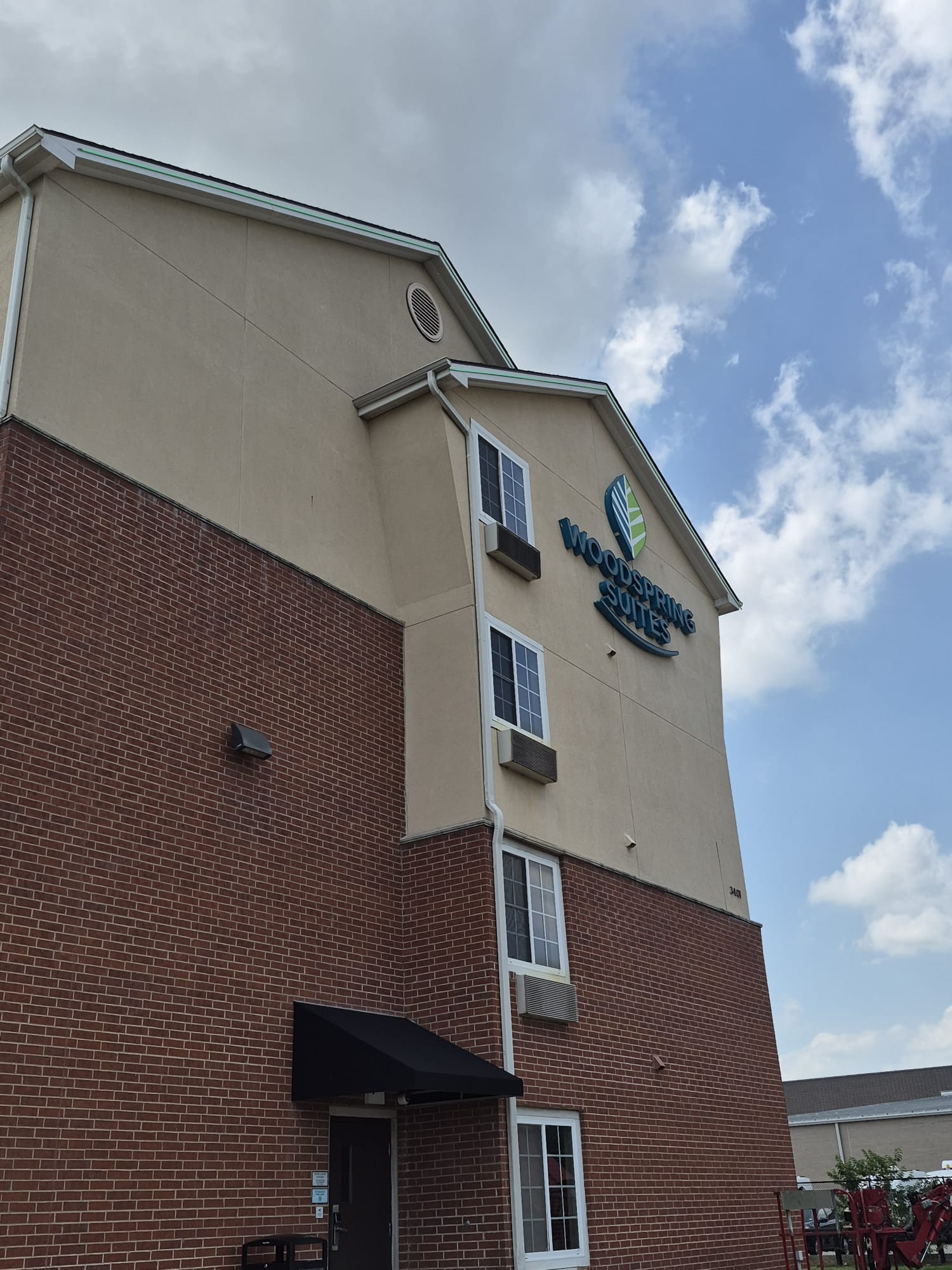
WoodSpring Suites
3401 N Central Expy, McKinney, TX
WO# A59667-0000001
24V DC / 96W Transformers
Southwest Signs (TDLR #18511)
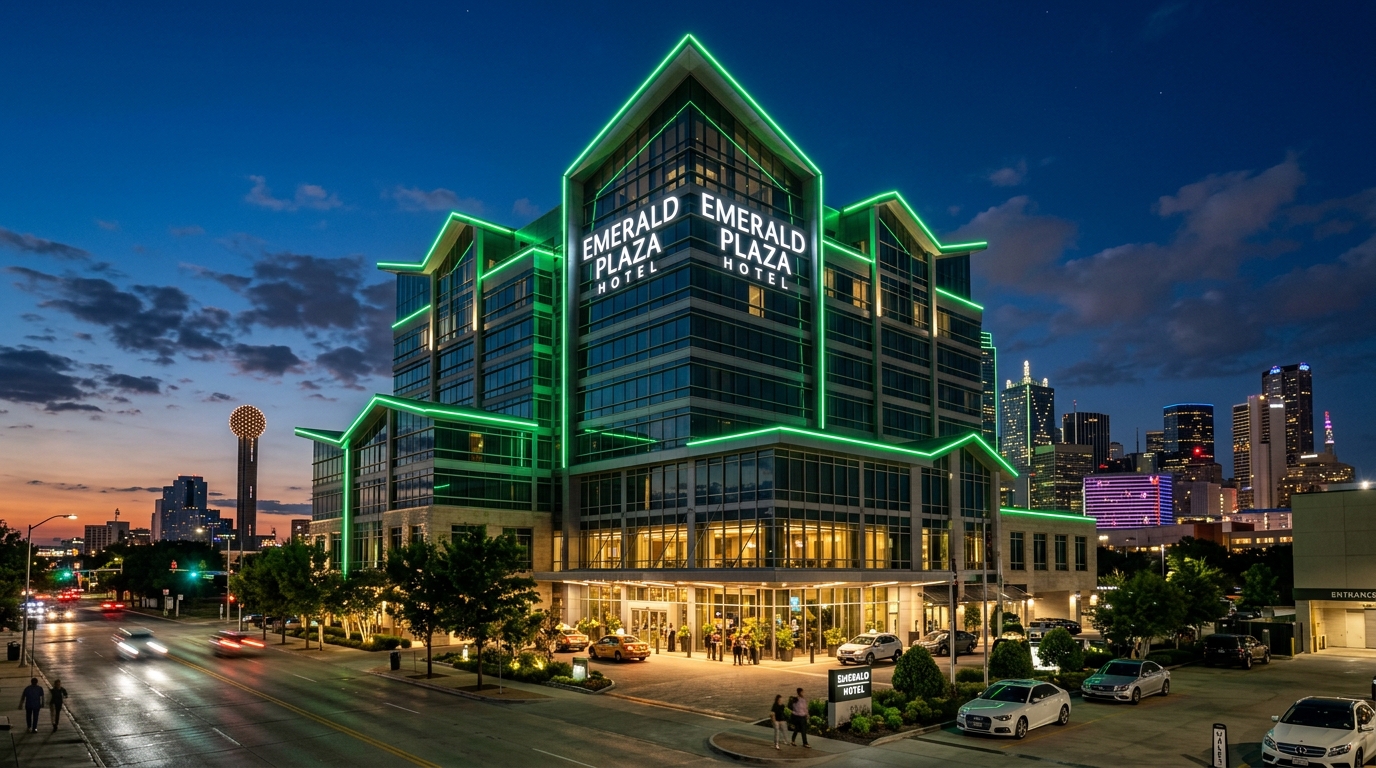
The Challenge: Night-Time Visibility Loss on North Central Expressway
Commercial properties along North Texas highways face relentless competition for night-time driver attention. For hospitality brands like WoodSpring Suites at 3401 N Central Expressway in McKinney, TX, their signature emerald-green architectural roofline tubing and brightly illuminated exterior channel letters serve as a 24/7 beacon for weary travelers.
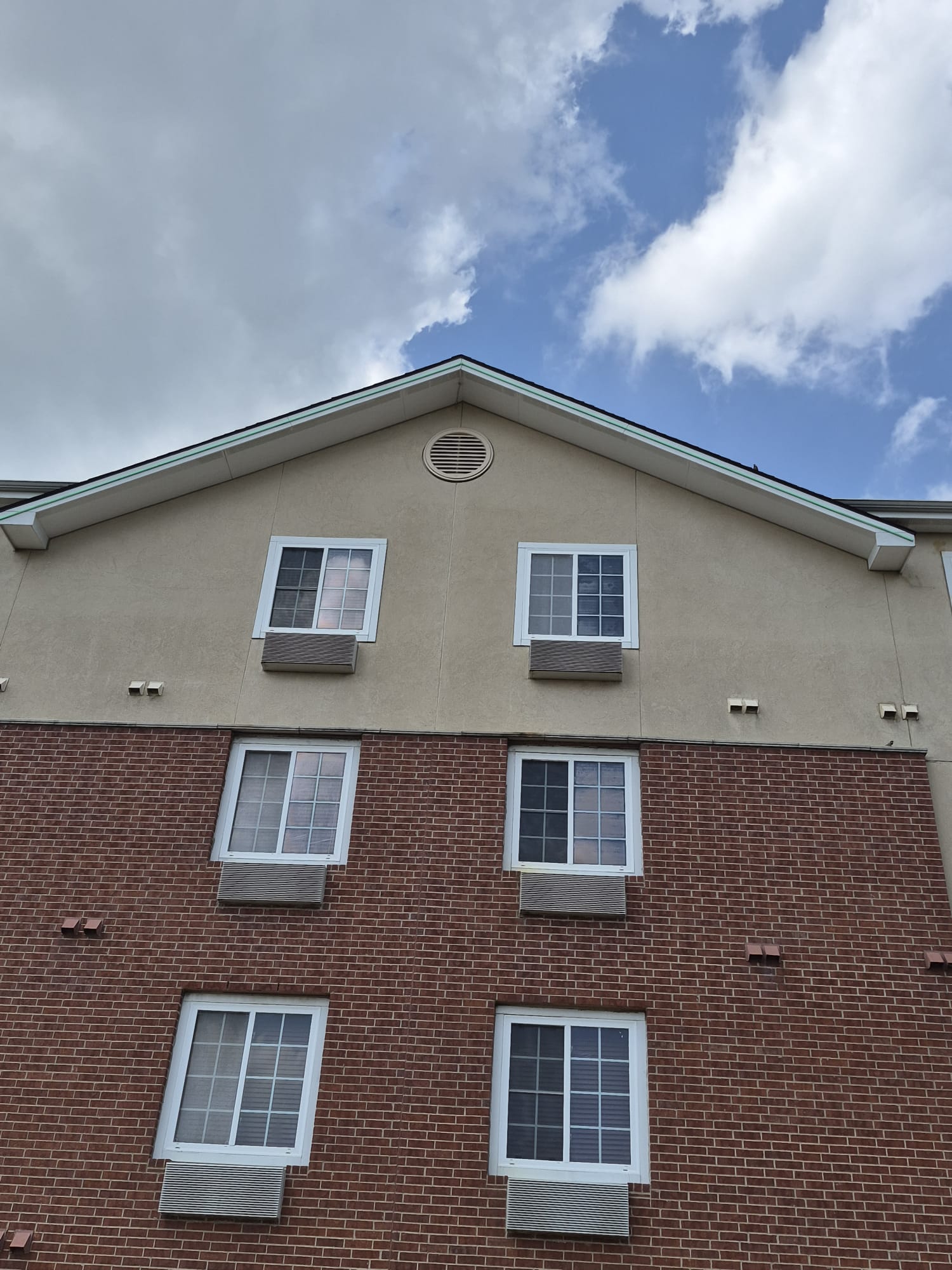
However, facility management reported a critical aesthetic failure: the prominent porte-cochère entry canopy and primary roof gables were exhibiting severe illumination defects. While portions of the run glowed green, other sections were completely dark, intermittent, or visibly dimming. A single dark section turns an otherwise modern 4-story property into an eyesore that implies deferred maintenance.
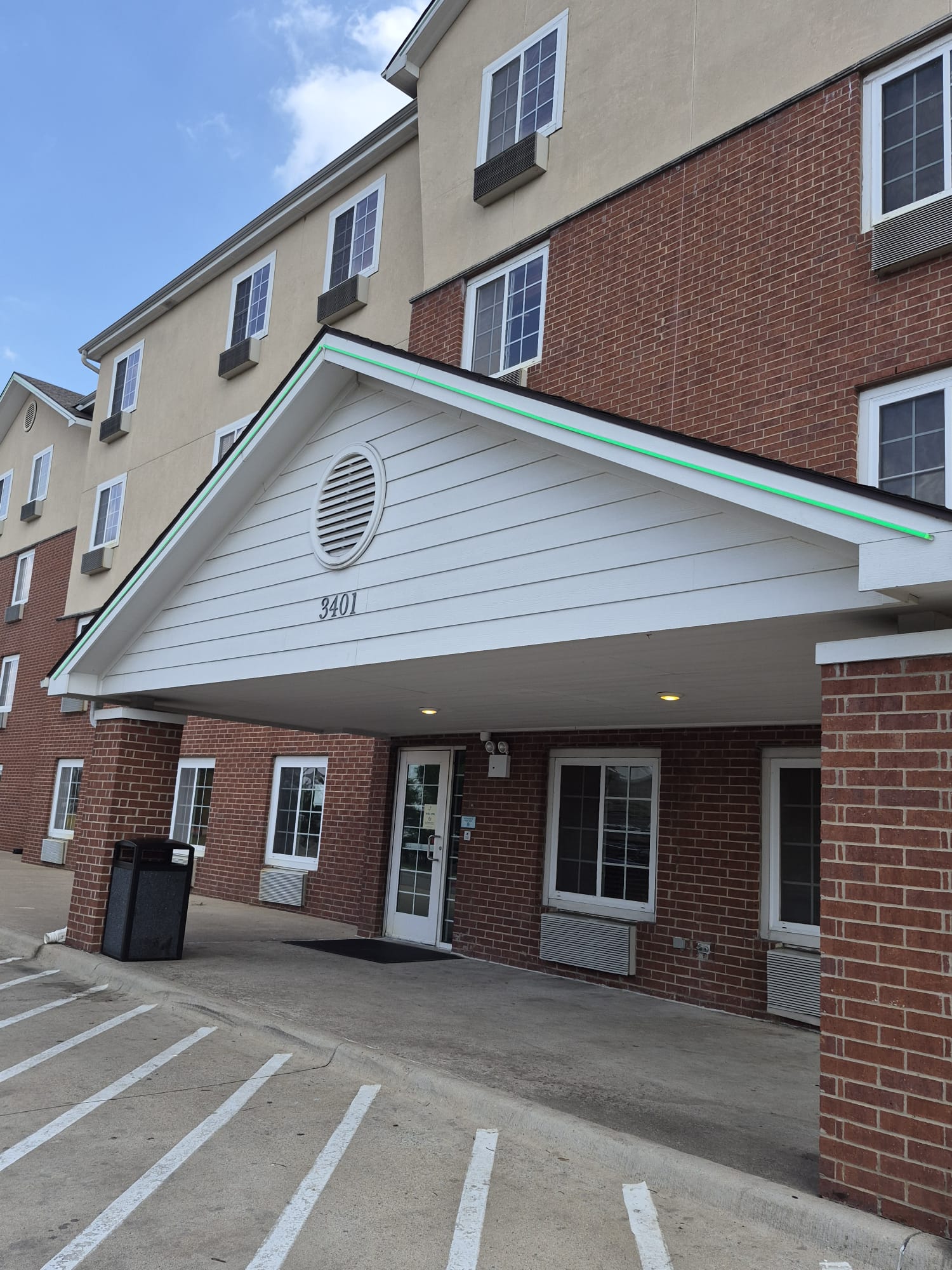
Field Diagnostics: The Engineering & Electrical Investigation
Repairing commercial architectural LED systems requires far more than merely swapping out a bulb. Unlike standard residential strip lighting, commercial exterior neon flex operates on engineered low-voltage distribution runs calculated to mitigate voltage drop over long linear distances.
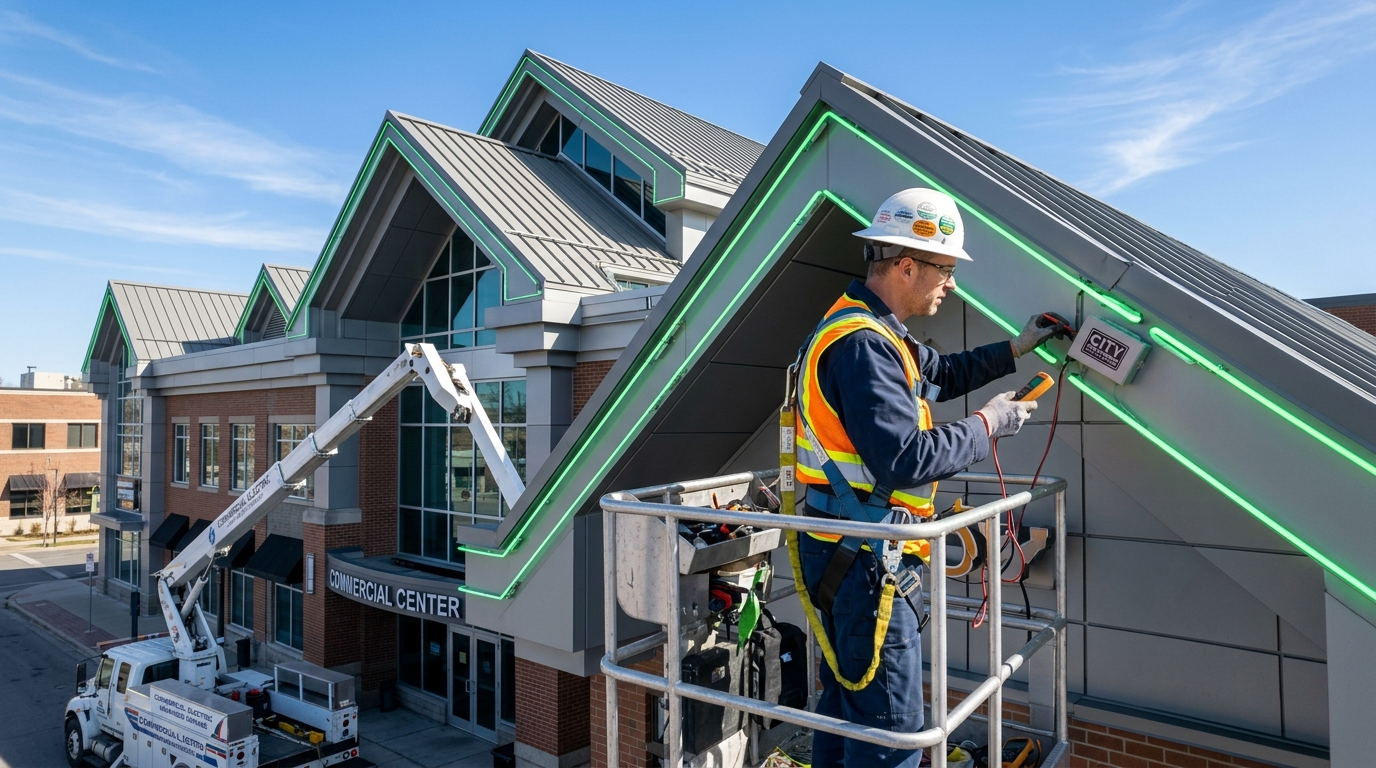
Operating under TDLR License #18511, the Southwest Signs crew dispatched bucket crane equipment to conduct an exhaustive diagnostic breakdown:
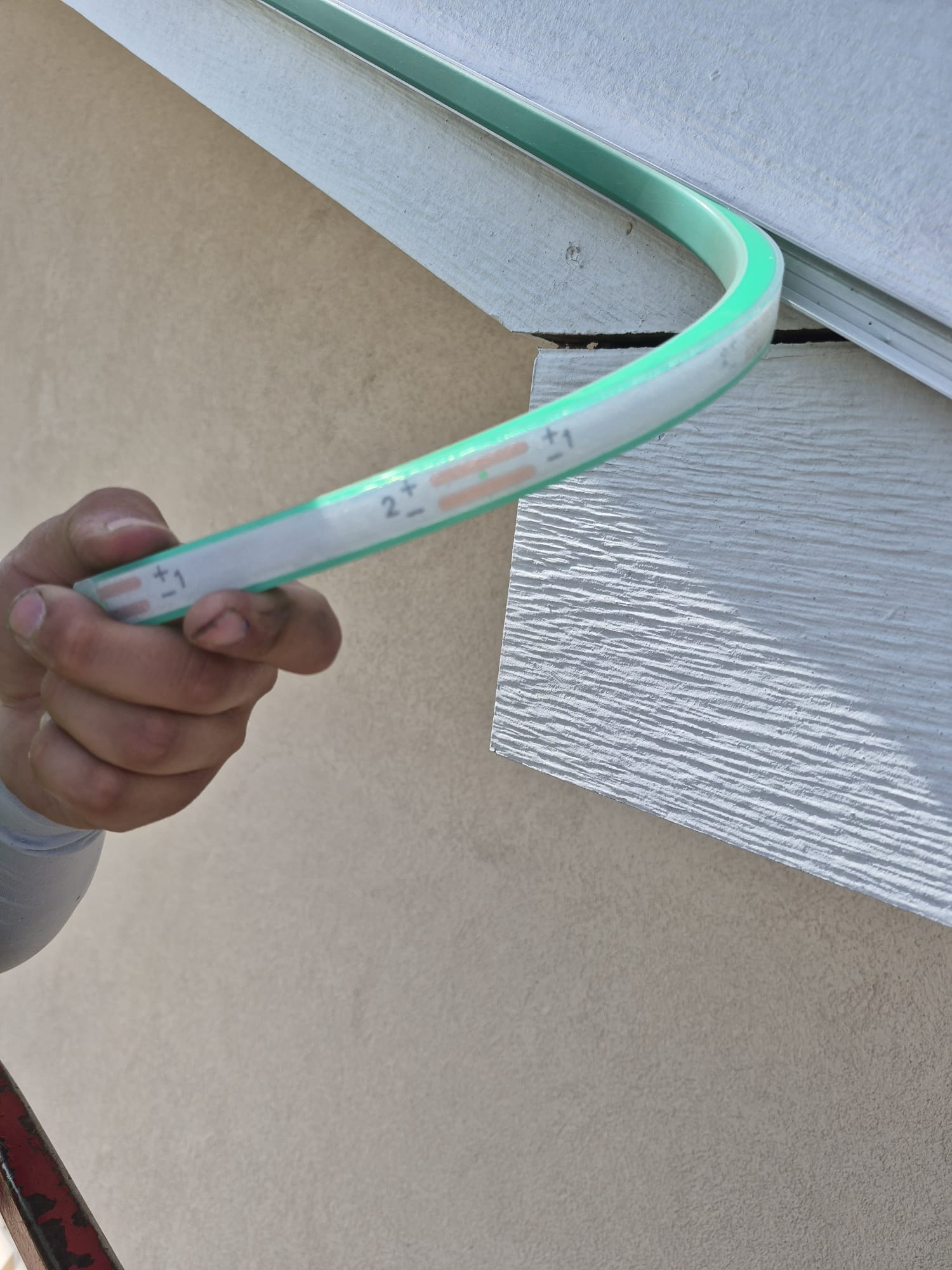
- Gable Pitch & Run Quantification: The lead technician documented 4 damaged runs of 20-foot green silicone LED neon rope lights spanning the building gables, requiring 24V 96W Class 2 power supply integration.
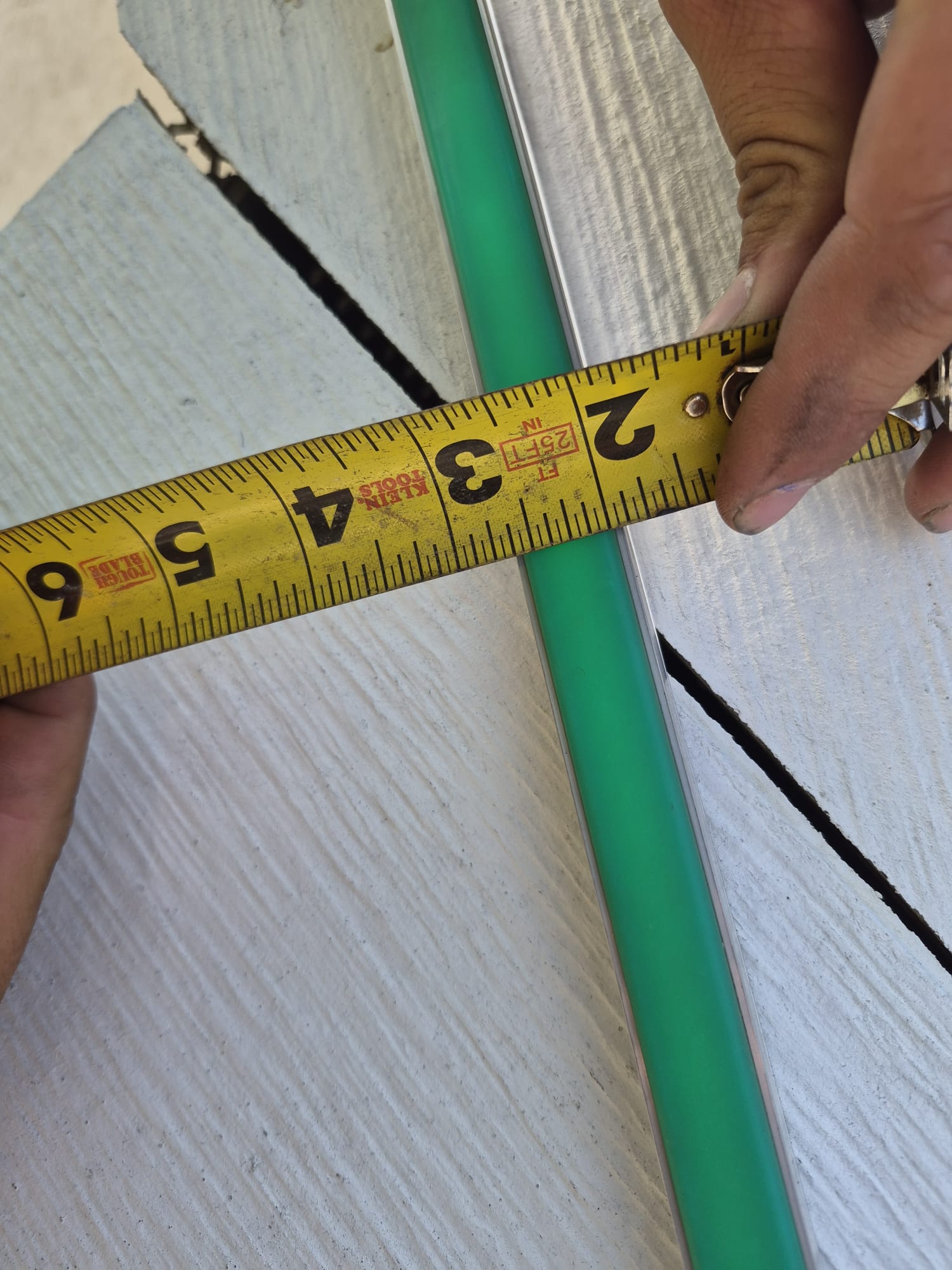
- Channel Profile Audit: Technicians measured the extruded aluminum mounting track and silicone profile to match the exact exterior dimensions and beam dispersion angle.
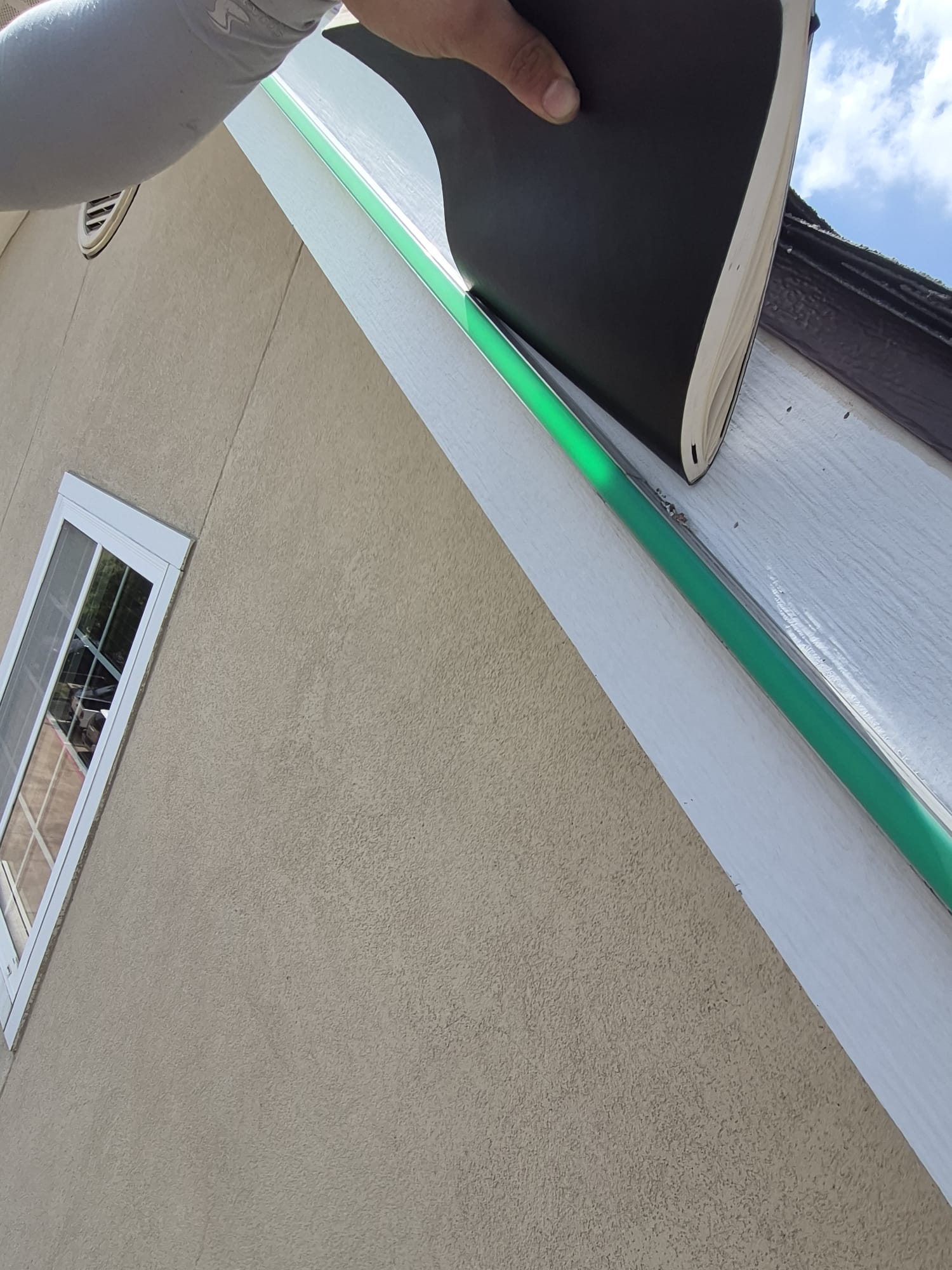
- Daylight Shading & Lumen Output Verification: Intense Texas sunlight frequently masks diode failure. Our technicians utilized black shadow shields to isolate the illumination cutoff points along the upper roofline fascia.
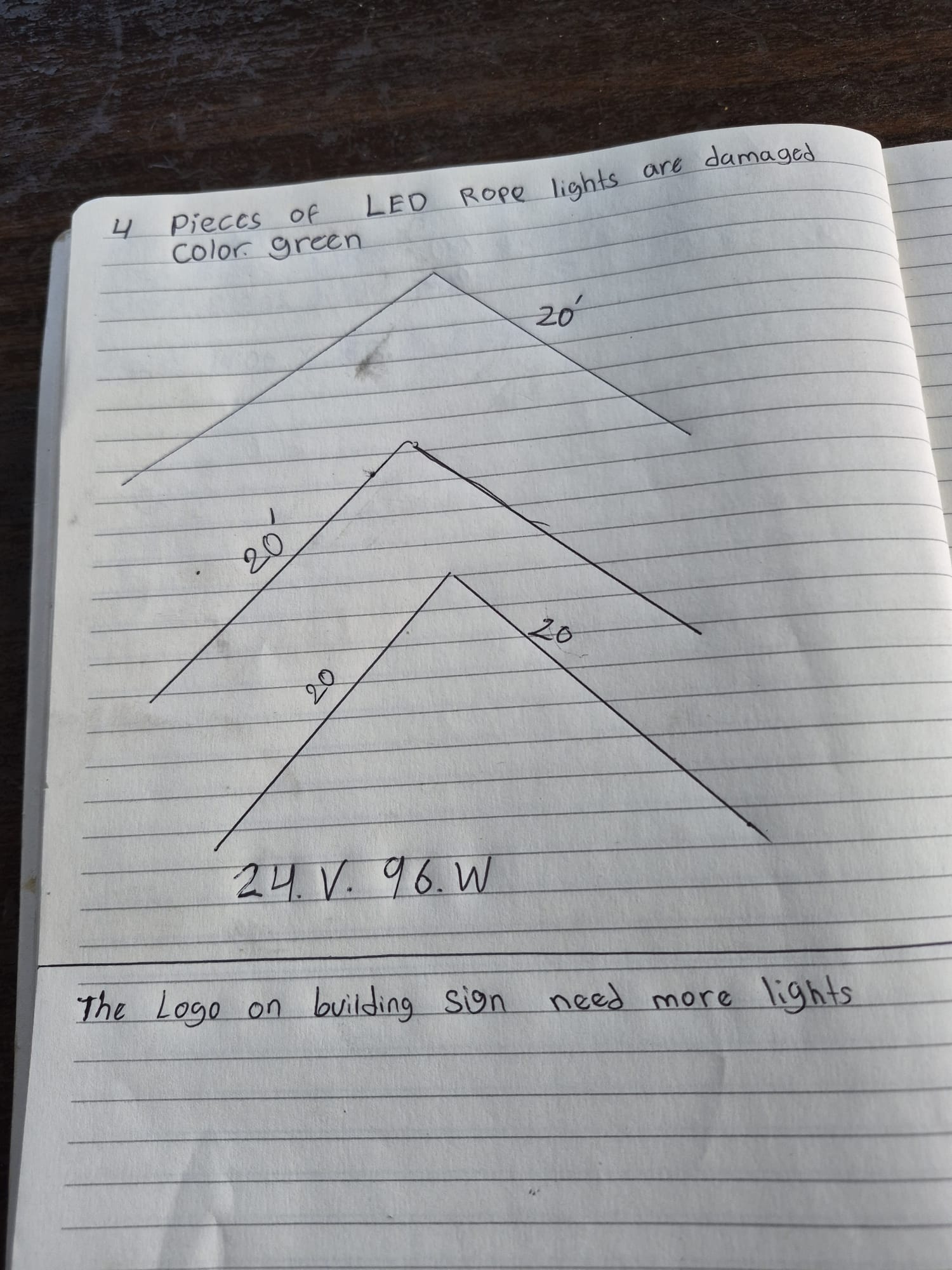
Electrical Technical Insight: 24V vs. 12V LED Flex
On architectural rooflines exceeding 40 to 60 total linear feet, 12V DC systems suffer substantial voltage drop, resulting in visible color shifting and dimness towards the end of the run. Upgrading to a 24V Class 2 constant-voltage architecture allows double the run distance per feed, ensuring razor-sharp, uniform brightness across the entire facade. Explore our Commercial LED Retrofits & Energy Savings guide for full ROI calculations.
Under the Hood: Building Sign Cabinet & Transformer Audit
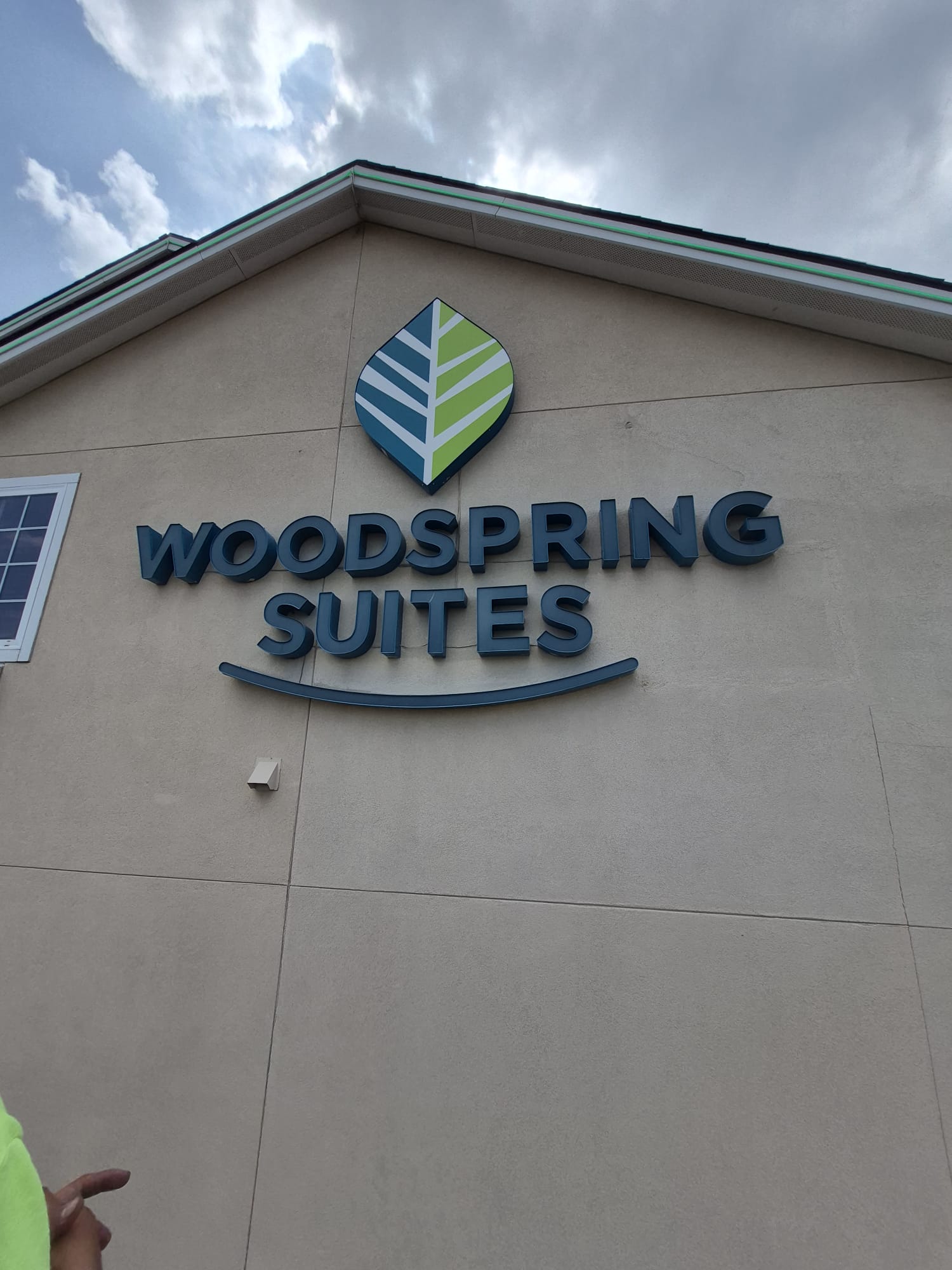
In addition to the roof gables, the service order specified troubleshooting the high-elevation exterior logo sign. A brand’s channel letter sign can illuminate weakly due to secondary wiring resistance, diode lumen degradation, or faulty transformer secondary output.
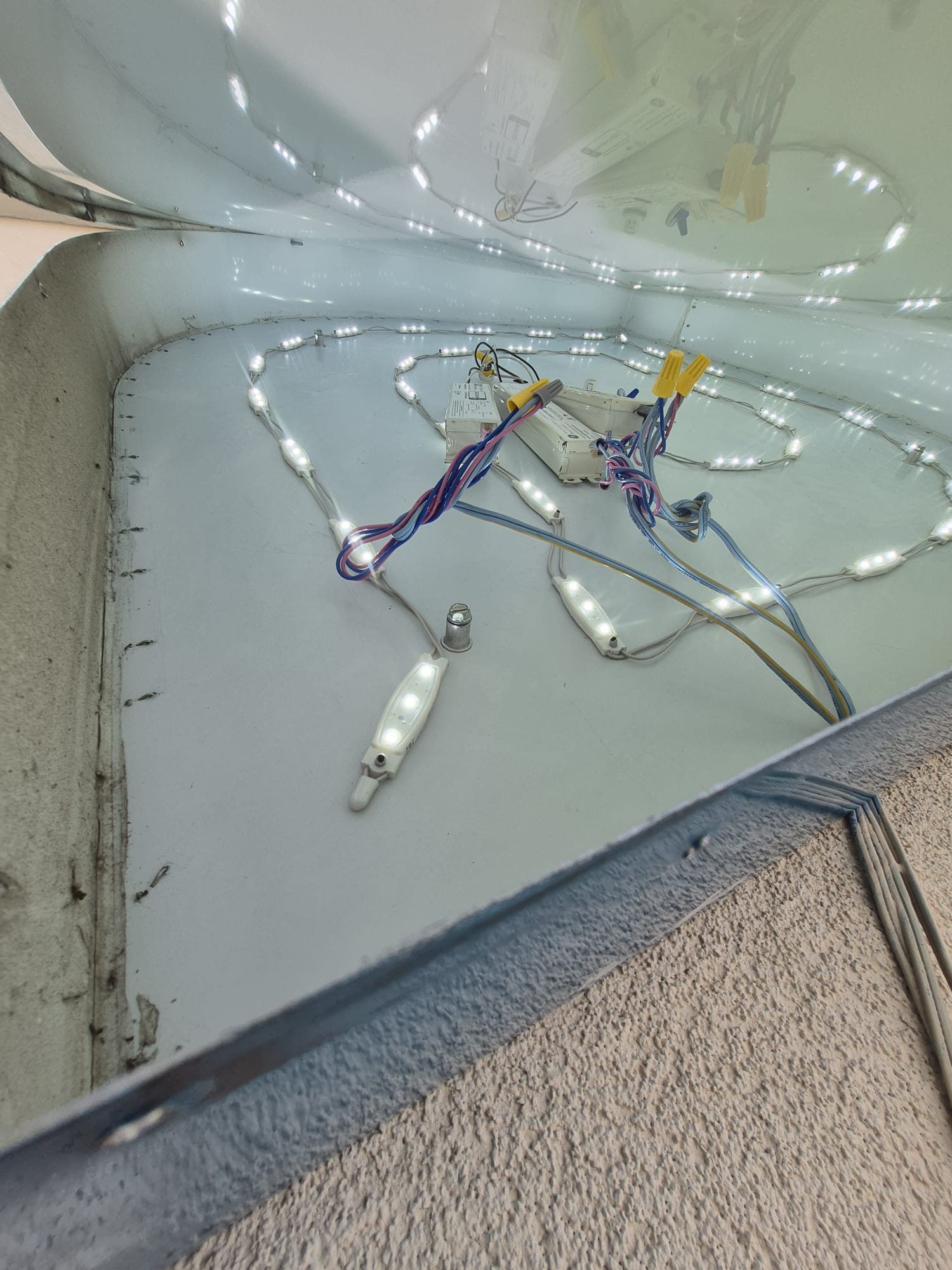
Removing the sign face revealed the internal wiring harness, low-voltage power supply banks, and modular LED runs. Our technicians tested primary 120V input voltages against secondary direct current (DC) output to isolate whether individual diode strings had degraded or the electronic power unit was choking load amperage.
The Permanent Solution: Weatherproof Sealing & Proper Load Balancing
Too many third-party sign companies take shortcuts by merely splicing temporary patches into broken neon tubing. This creates immediate water ingress pathways during heavy North Texas thunderstorms.
Southwest Signs implemented our turnkey restoration protocol:
- Complete Run Replacement: Replaced all fractured 20-foot silicone runs with premium UV-stabilized, IP67-rated exterior silicone neon flex.
- Commercial Silicone Capping: All electrical pass-through penetrations and mounting holes were sealed with industrial structural silicone to protect the building fascia from moisture rot.
- Dual-Circuit Balancing: Distributed load across dedicated 24V 96W Class 2 power supplies to safeguard against thermal overload and maximize component lifespan.
- Full System Night Commissioning: Validated seamless illumination across all elevations, restoring WoodSpring Suites’ unmistakable commercial presence along US-75.
Need Commercial Sign or Architectural Lighting Repair?
Dark roofline accents or dim channel letters hurting your facility’s curb appeal? Southwest Signs provides same-day and scheduled dispatch across McKinney, Frisco, Plano, and all North Texas.
Frequently Asked Questions About Commercial Sign & LED Repair
Commercial silicone neon flex consists of grouped LED diode series. When thermal expansion fractures a single internal solder joint or PCB trace—or when moisture penetrates the end cap—that entire 3-to-6-foot circuit section drops out, leaving the remainder dark.
In Texas, commercial exterior signs connect directly to primary commercial electrical feeds (120V/277V). State law mandates that only licensed Electrical Sign Contractors (TDLR) operate on these high-voltage enclosures to ensure fire safety, code compliance, and structural wind-load integrity.
Ensure that all fascia wall penetrations are sealed with commercial neutral-cure silicone, verify that drain weep holes at the base of channel letters remain unclogged, and insist on IP67/IP68 rated waterproof connections for all external neon flex leads.
Related Solutions: Explore our Commercial Exterior Signage, learn about 24/7 Facility Sign Maintenance, or browse our North Texas Commercial Portfolio.