
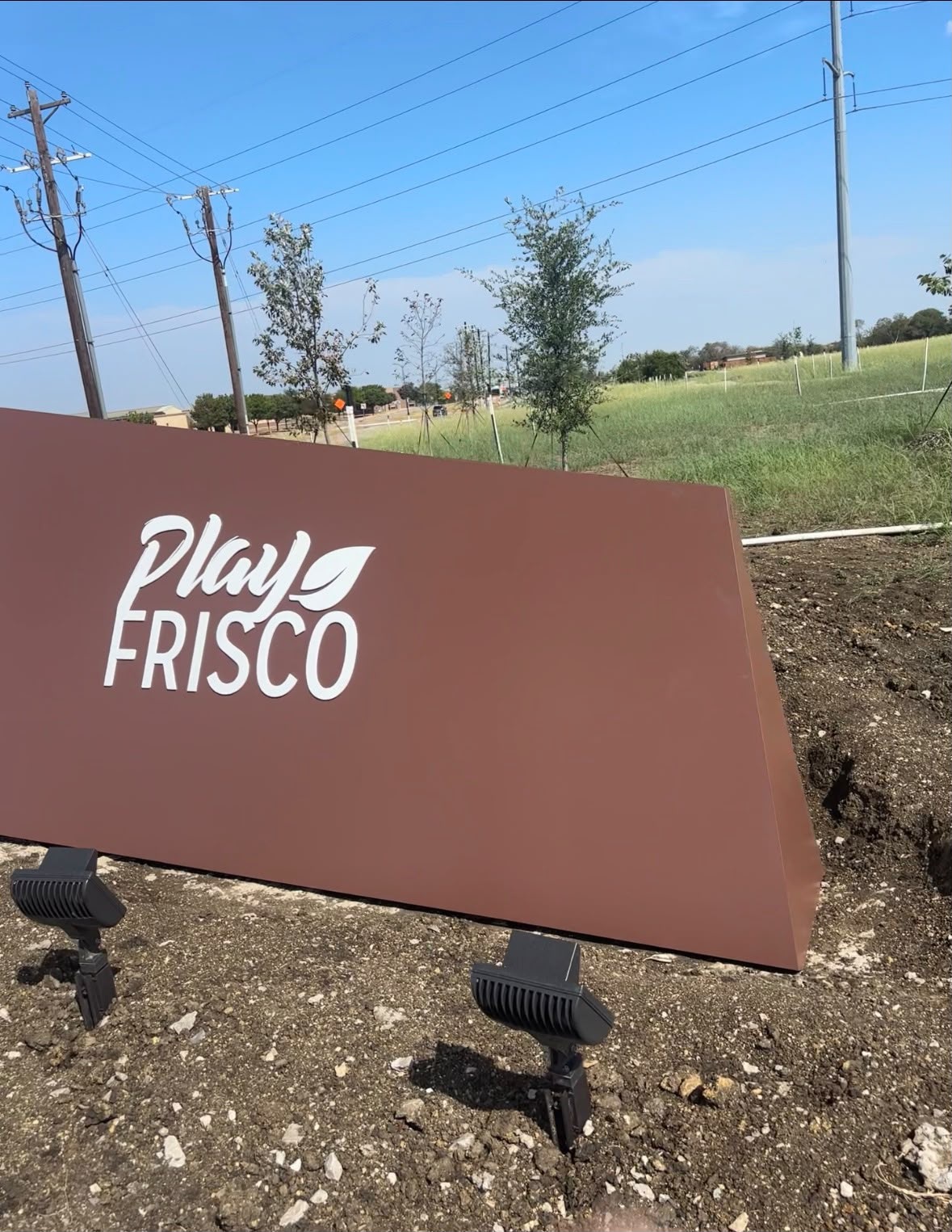
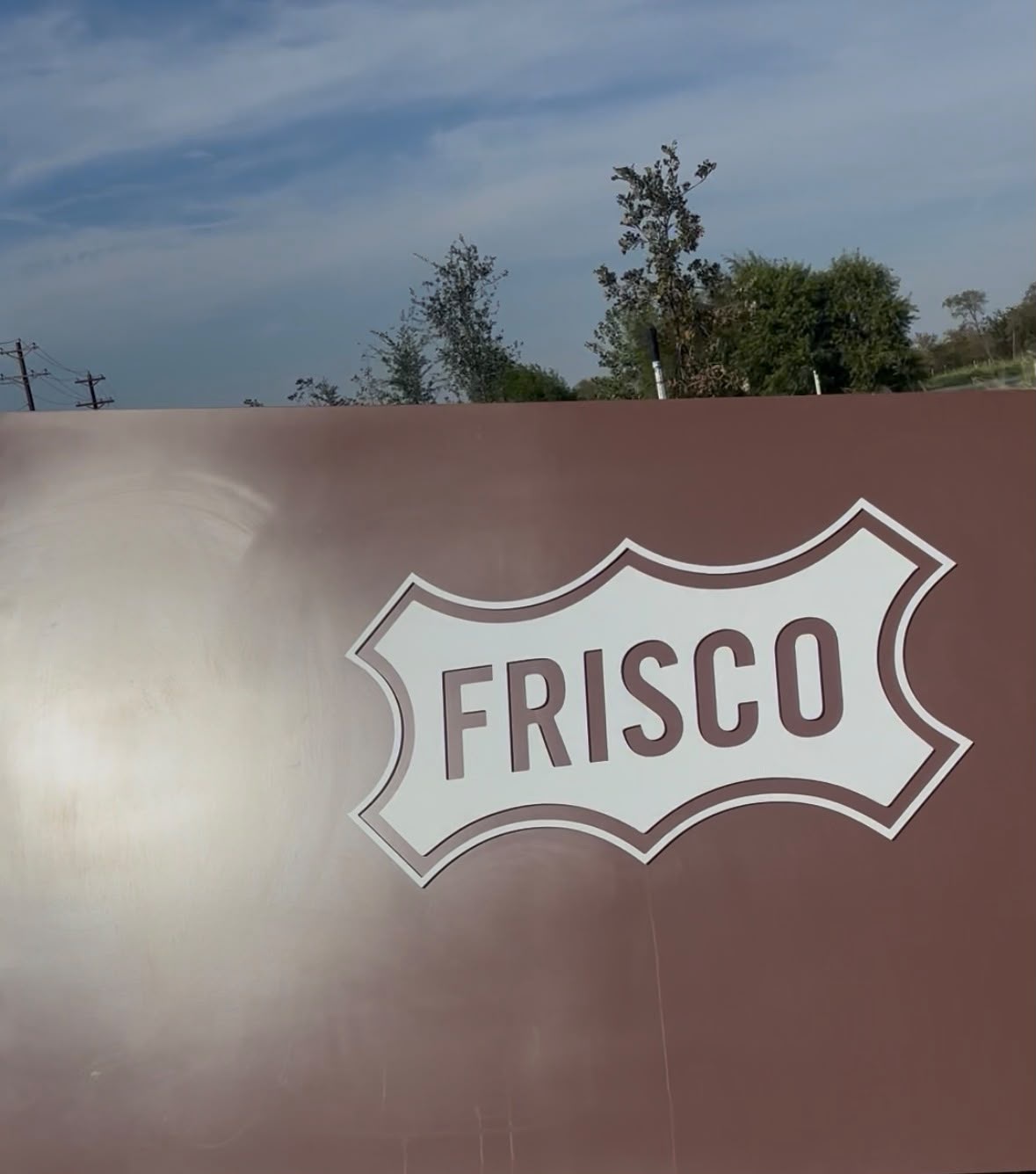
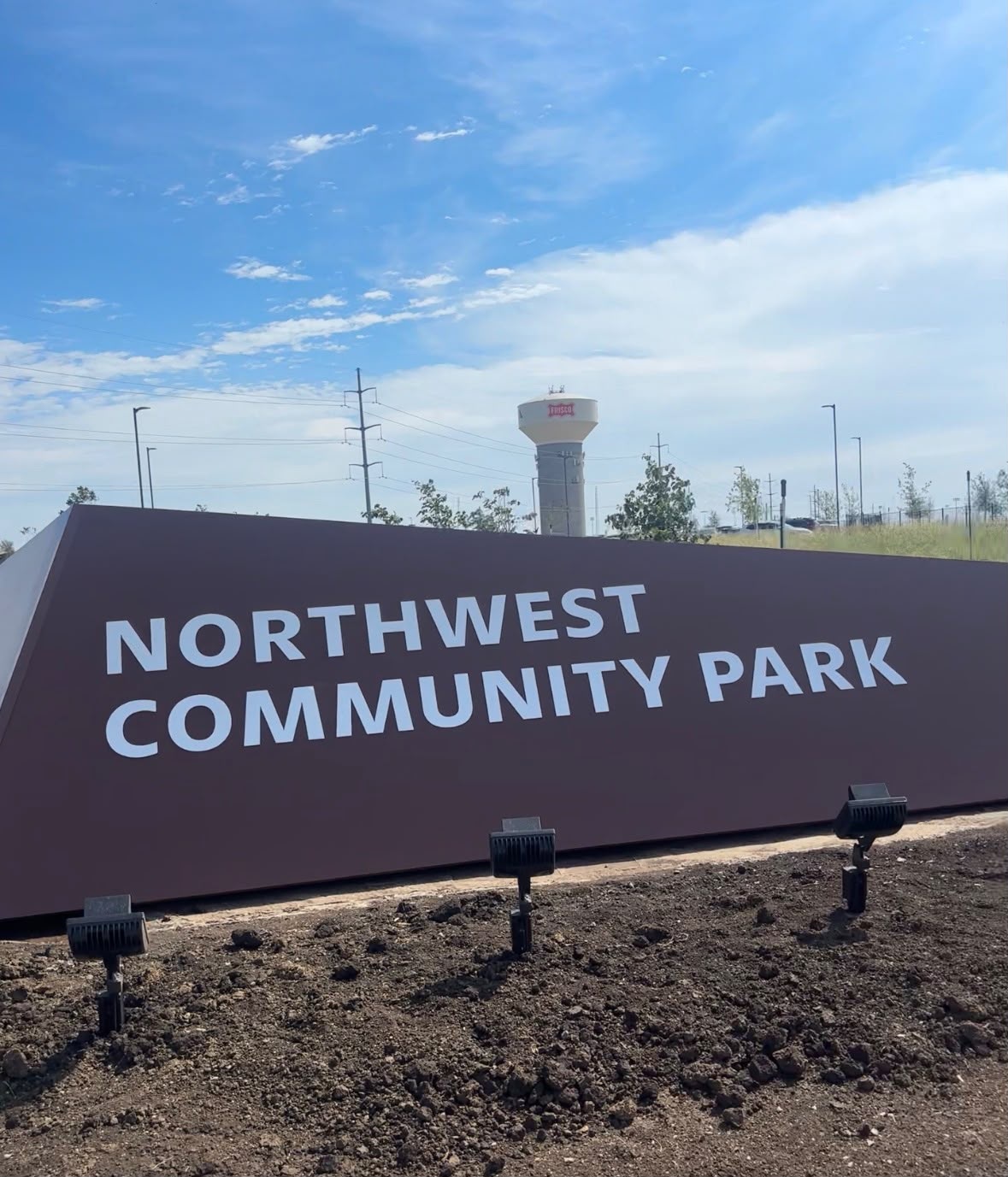
For the City of Frisco Parks & Recreation Department at Northwest Community Park (13770 Teel Pkwy), Southwest Signs & Graphics engineered, permitted, and erected a 15,100-pound custom monolithic Texas Cream Austin limestone monument sign. Installed using a 50-ton hydraulic mobile crane and dual 24-inch drilled concrete caisson piers anchored 8 feet into expansive Houston Black clay, the entrance feature integrates laser-cut 1/2-inch architectural stainless steel lettering and Dark-Sky compliant low-voltage LED ground-well illumination certified under Texas electrical license TDLR #18511.
City of Frisco Parks & Rec
13770 Teel Pkwy, Frisco, TX
15,100 lbs Texas Limestone
ASCE 7-16 (115+ MPH Stamped)
Southwest Signs (TDLR #18511)
50-Ton Mobile Hydraulic Crane
- 1. The Municipal Scope: Northwest Community Park Entrance Landmark
- 2. Geotechnical Challenges: Houston Black Soil & Drilled Pier Caissons
- 3. Crane Rigging Execution: Setting 7.5 Tons with Sub-Millimeter Precision
- 4. Technical Benchmarks: Commercial Sign Engineering Standards
- 5. Park Campus Wayfinding: Architectural Pylon Network
- 6. Photometric Commissioning: Dark-Sky Low-Voltage LED Testing
- 7. Frisco Commercial Monument Sign Permitting FAQs
1. The Municipal Scope: Northwest Community Park Entrance Landmark
When commercial general contractors, landscape architects, and municipal developers evaluate monument sign installation in Frisco, TX, standard aluminum extrusion cabinets and thin synthetic foam monuments rarely meet the aesthetic or durability standards required for high-visibility public spaces.
For the City of Frisco Parks & Recreation Department, their signature development at Northwest Community Park (13770 Teel Parkway) demanded a commanding, generational landmark. The design called for an unreinforced, single-piece monolithic quarry stone block quarried from central Texas limestone strata, weighing over 15,100 pounds (7.55 tons), with flush-mounted precision metal lettering and integrated Dark-Sky ground illumination.
Unlike conventional multi-tenant shopping center pylon signs built from aluminum pan faces, a solid limestone monolith presents unique engineering challenges: zero flexibility during transport, severe brittle fracture risks under point loads, and immense dead-weight overturning moments under North Texas severe weather conditions.
2. Geotechnical Challenges: Houston Black Soil & Drilled Pier Caissons
Frisco and northern Collin County reside entirely within the Blackland Prairie geological formation, dominated by Houston Black clay. This soil type exhibits one of the highest shrink-swell plasticity indices (PI > 45) in North America. During drought periods, soil shrinks and fissures; during flash thunderstorm seasons, expansive heave pressures exceed 4,500 psf.
Standard shallow spread footings (18 to 24 inches) used by lightweight sign companies inevitably tilt, crack, or settle unevenly within 24 to 36 months when supporting massive stone. To guarantee permanent structural verticality, Southwest Signs & Graphics collaborated with Texas-licensed Professional Engineers (PE) to design an engineered sub-grade foundation system:
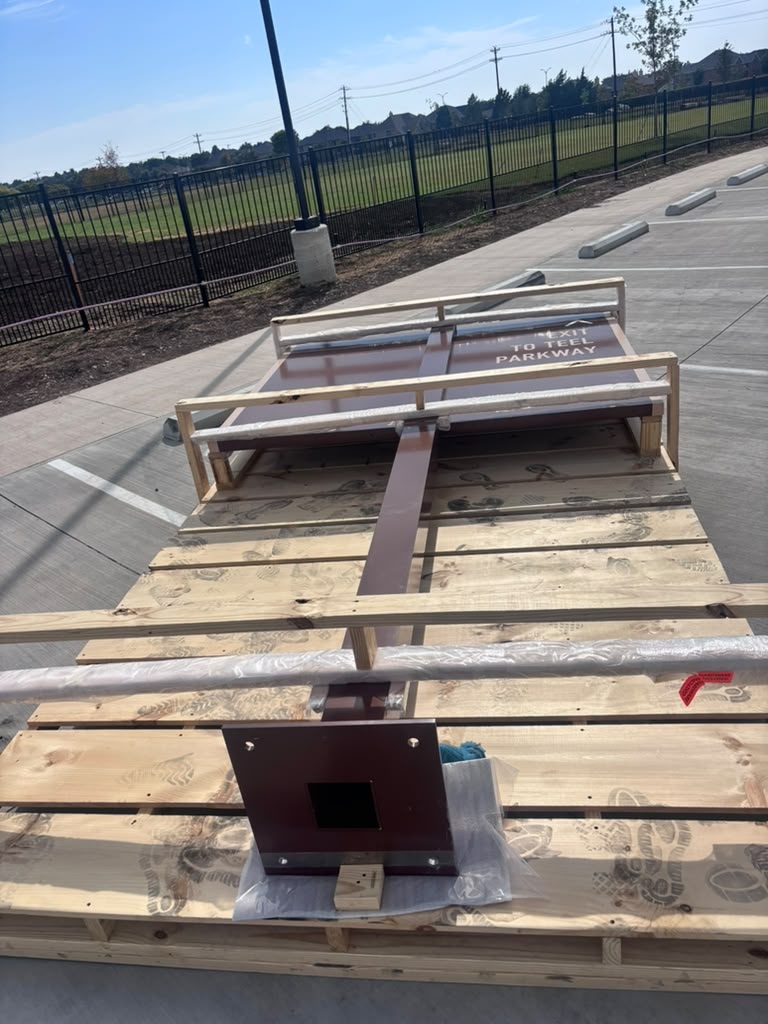
- Dual Drilled Shaft Caissons: Two 24-inch diameter drilled piers bored to a depth of 8 feet below finished grade, penetrating through active moisture zones into competent Austin Chalk limestone bedrock.
- Grade Beam Reinforcement: A monolithic 36-inch wide by 18-inch thick reinforced concrete grade beam with ASTM A615 Grade 60 #5 continuous rebar cages and #3 stirrups spaced at 8 inches on center.
- Stainless Steel Embed Pins: 1-inch diameter Type 316 stainless steel shear dowels core-drilled 6 inches into the bottom limestone face and anchored into the foundation using high-strength structural epoxy.
Engineering Best Practice: Wind Load vs. Dead Weight
Under ASCE 7-16 Minimum Design Loads and Frisco municipal wind velocity criteria (Risk Category I, Basic Wind Speed 115 MPH, Exposure Category C), sign structures face extreme lateral overturning forces. For a monolithic stone sign, dead-load resistance actually assists gravity stabilization, but requires exact PE-calculated center-of-gravity placement to prevent seismic shear and foundation torque. Review our Zoning Surveys & PE Wind Load Permitting services for complete commercial pre-construction protocols.
3. Crane Rigging Execution: Setting 7.5 Tons with Sub-Millimeter Precision
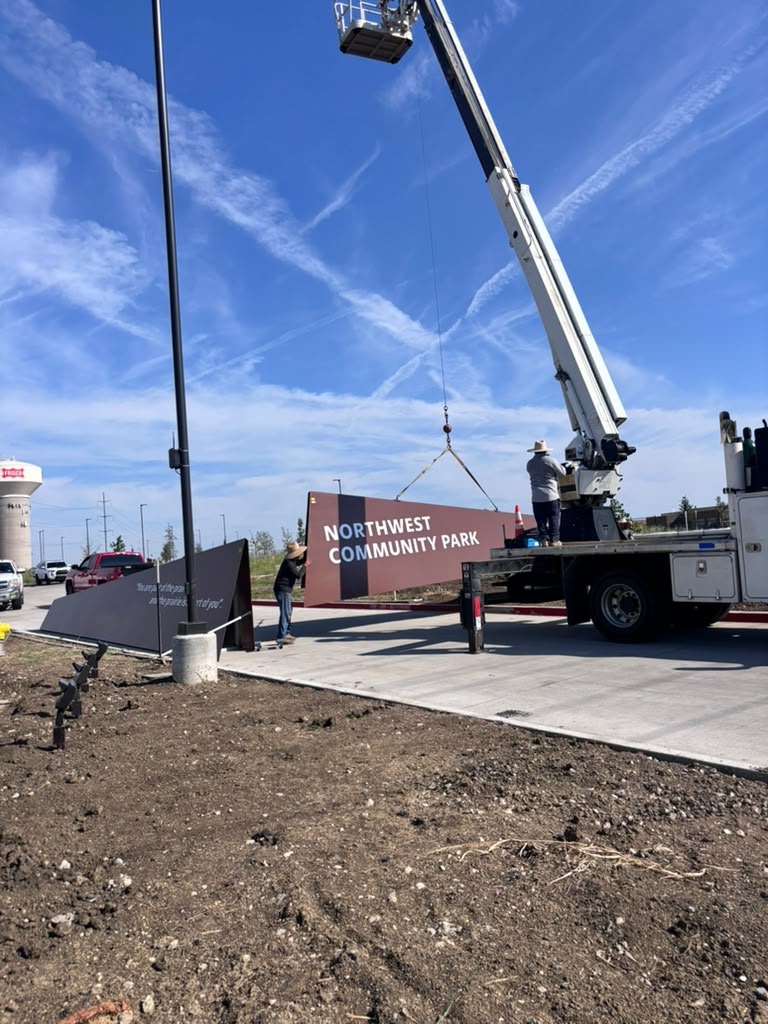
Setting a 15,100-pound natural limestone monolith requires certified mobile crane machinery and experienced rigging personnel. Unlike steel sign poles that can be clamped or chained, natural limestone has low tensile strength and fractures instantly if subjected to point-contact steel chains.
Southwest Signs deployed our owned fleet assets—including our 50-ton hydraulic mobile crane and certified rigging crew—utilizing the following field protocol:
- Synthetic Web Sling Chokers: Four wide-body synthetic polyester slings rated for 24,000 lbs in basket configuration with corner edge protectors to distribute lift pressure evenly across the stone perimeter.
- Laser Sightline Alignment: Technicians established a 3D laser reference datum aligning the monolith’s primary visual face with the Teel Parkway road curvature and the Frisco municipal water tower elevation in the background.
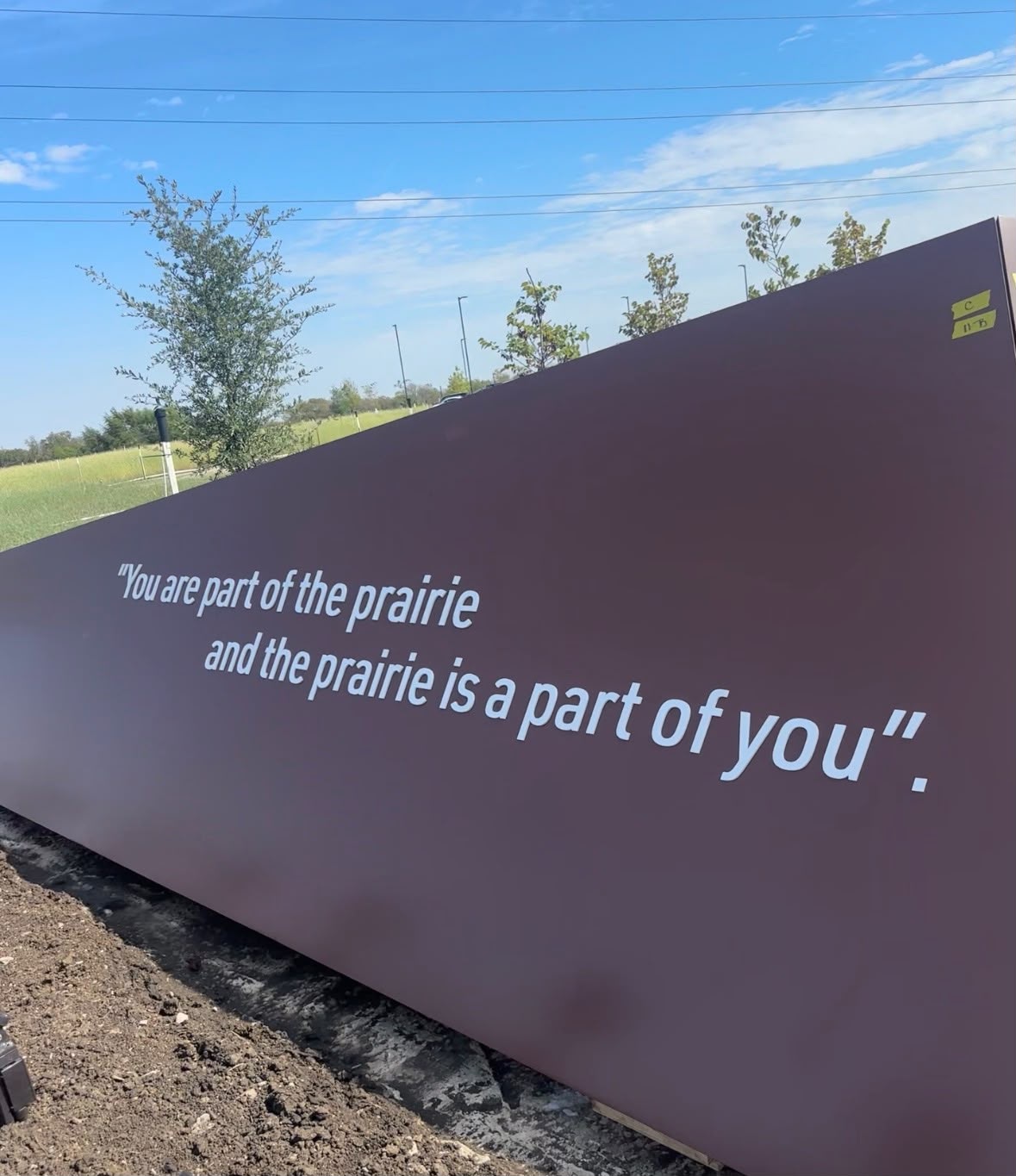
- Non-Shrink Structural Grout Bed: The slab was lowered onto high-density shim packs over a continuous bed of MasterFlow high-strength non-shrink cementitious grout, eliminating point-load voids beneath the stone.
4. Technical Benchmarks: Commercial Sign Engineering Standards
Commercial property owners, corporate general contractors, and municipal authorities cannot risk contracting sign vendors who cut corners on structural foundations, wind load stamps, or master electrical wiring. Here is how Southwest Signs & Graphics compares against standard regional sign shops:
5. Park Campus Wayfinding: Architectural Pylon Network
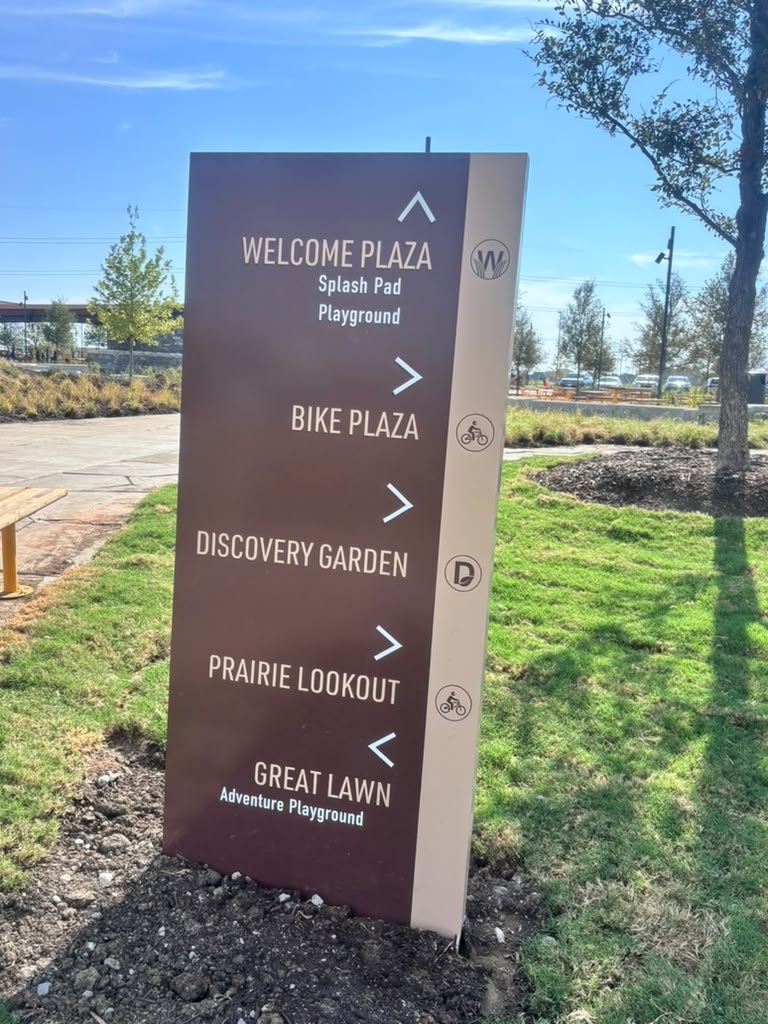
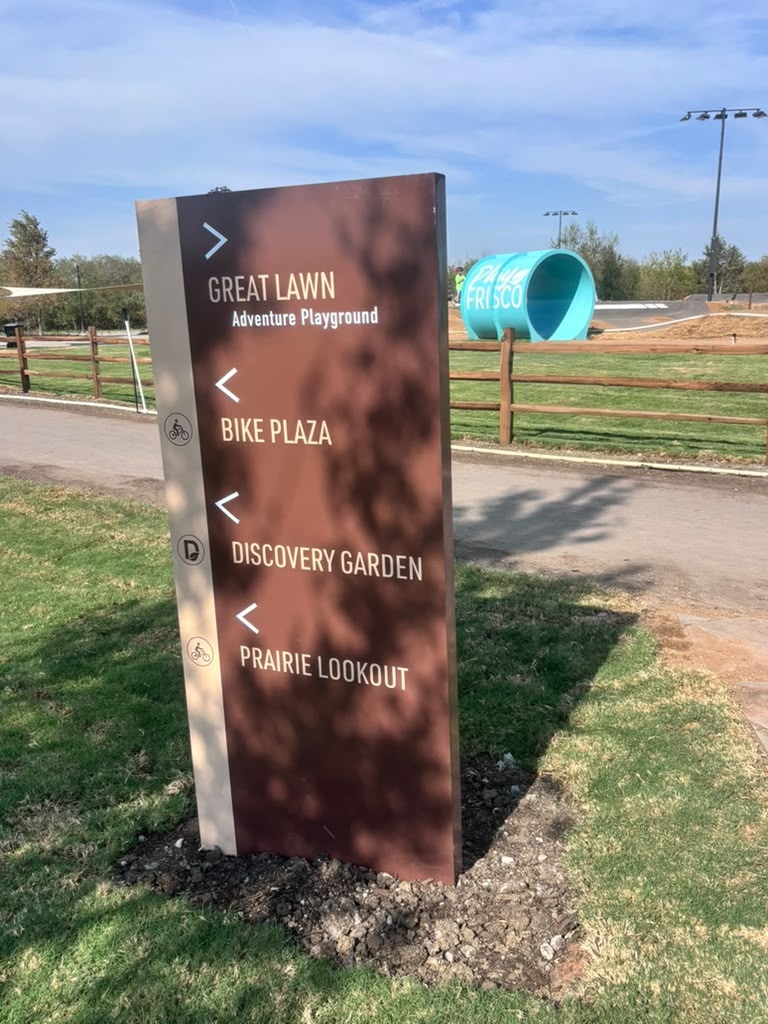
A municipal park’s signage package extends well beyond the entrance monument. Northwest Community Park spans multi-use bike trails, sports complexes, open lawns, and nature preserves. Visitors navigating the campus require clear, high-contrast architectural directional signage that withstands weathering, vandalism, and intense UV sun exposure.
Southwest Signs engineered and installed a multi-tier wayfinding pylon network across key trail junctions, finished with exterior-grade electrostatic fluoropolymer powder coating and reflective vinyl directional typography:
6. Photometric Commissioning: Dark-Sky Low-Voltage LED Testing
City of Frisco zoning ordinances mandate strict compliance with outdoor lighting guidelines to prevent light pollution, roadway glare along Teel Parkway, and light trespass onto adjacent residential subdivisions.
Operating under our TDLR Electrical Contractor License #18511, our master electricians conducted a comprehensive night commissioning audit:
- In-Ground Well Flood Fixtures: Recessed IP68 submersible LED well fixtures set flush in pea-gravel drainage collars, eliminating trip hazards for pedestrians and mowers.
- Warm White 3000K Diode Spectrum: High Color Rendering Index (CRI > 85) 3000K warm white emitters selected to highlight the natural cream undertones of Texas limestone without harsh blue glare.
- Shielded Optical Baffles: Internal directional honeycomb louvers restricting illumination cutoff angles strictly to the sign face, registering 0.00 foot-candles at the park property boundary.
7. Frisco Commercial Monument Sign Permitting FAQs
What are the size and height limits for commercial monument signs in Frisco, TX?
Under City of Frisco Sign Ordinance (Sec. 6.12), standard commercial monument signs are generally restricted to a maximum height of 8 feet and a maximum sign face area of 60 to 80 square feet, depending on street frontage classification and corridor overlay districts. Signs exceeding these dimensions or utilizing non-standard materials require a variance application heard before the Planning & Zoning Commission.
Does the City of Frisco require stamped engineering drawings for monument signs?
Yes. All commercial monument signs in Frisco require structural drawings signed and sealed by a Texas-licensed Professional Engineer (PE). Plans must calculate soil bearing capacity, foundation drilled pier depth, anchor bolt tension, and resistance against minimum 115 MPH design wind loads under ASCE 7-16 standards.
Must commercial sign electricians hold a state TDLR license in Texas?
Yes. Under Texas law (Texas Occupations Code Chapter 1305), any contractor connecting or installing electrical sign equipment must hold a valid Texas Electrical Sign Contractor license issued by the Texas Department of Licensing and Regulation (TDLR). Southwest Signs & Graphics operates under Master Electrician License TDLR #18511.
How long does the turnkey monument sign process take from permit to installation?
A typical commercial monument sign installation in Frisco requires 4 to 8 weeks. This timeline includes 2 to 3 weeks for municipal zoning and building permit review, 2 to 4 weeks for stone quarrying, CNC fabrication, or cabinet assembly, and 2 to 3 days for foundation drilling, concrete cure, and crane erection. Learn more about ongoing maintenance via our 24/7 Commercial Facility Sign Services.
Planning a Commercial Monument Sign in Frisco or DFW?
Connect directly with our master sign electricians and structural rigging specialists. We handle site surveys, PE-stamped engineering, City of Frisco permitting, and heavy crane erection.