
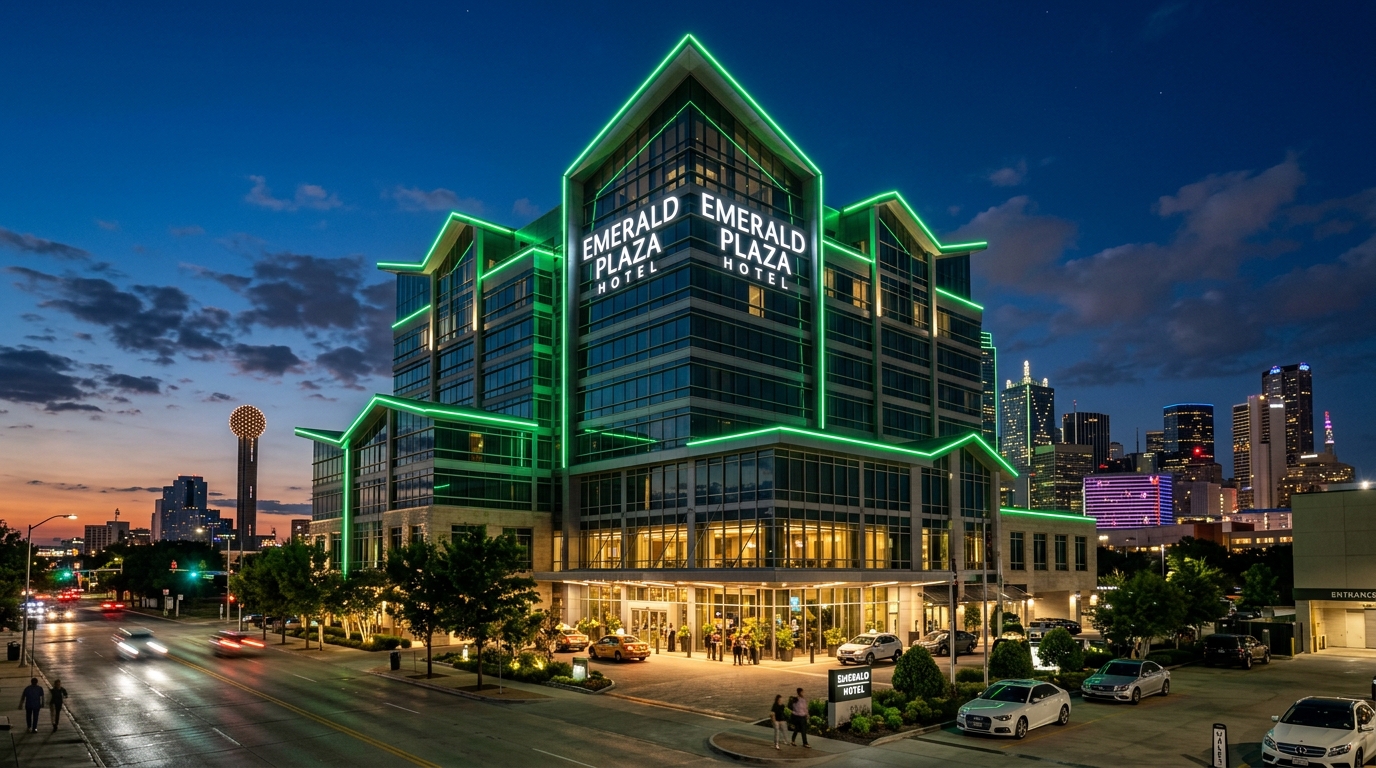
Commercial architectural lighting failures on highway hospitality properties damage brand authority and create life-safety electrical hazards. For the 4-story WoodSpring Suites facility at 3401 N Central Expressway in McKinney, TX (Work Order #A59667-0000001), Southwest Signs & Graphics mobilized an aerial bucket truck crew under master sign electrical license TDLR #18511. Our technicians diagnosed degraded 12V voltage-drop sections, re-engineered the roofline into balanced 24V DC / 96W Class 2 power supply circuits, replaced failed neon tubing with IP67 UV-stabilized exterior silicone flex, and restored 100% nighttime visibility along the US-75 commercial corridor.
WoodSpring Suites McKinney
3401 N Central Expy, McKinney, TX
WO# A59667-0000001
24V DC / 96W Class 2 Drivers
Southwest Signs (TDLR #18511)
65ft Insulated Aerial Bucket Truck
- 1. The Emergency Callout: Dark Highway Gables on US-75
- 2. Field Diagnostics: Pinpointing Voltage Drop & Circuit Fractures
- 3. Electrical Load Engineering: 24V vs. 12V Constant Voltage Design
- 4. Channel Letter Cabinet & Secondary Transformer Audit
- 5. Turnkey Repair Benchmarks: Licensed TDLR vs. Uncertified Splicers
- 6. The Permanent Solution: IP67 Sealing & Night Commissioning
- 7. Commercial Sign & Lighting Repair FAQs in McKinney, TX
1. The Emergency Callout: Dark Highway Gables on US-75
When facility directors, hospitality managers, and commercial building owners seek commercial sign repair in McKinney, TX, nighttime visual reliability is directly tied to business revenue. Along high-speed highway corridors like US-75 (North Central Expressway), travelers make booking decisions in fractions of a second based on exterior curb appeal and illuminated brand presence.
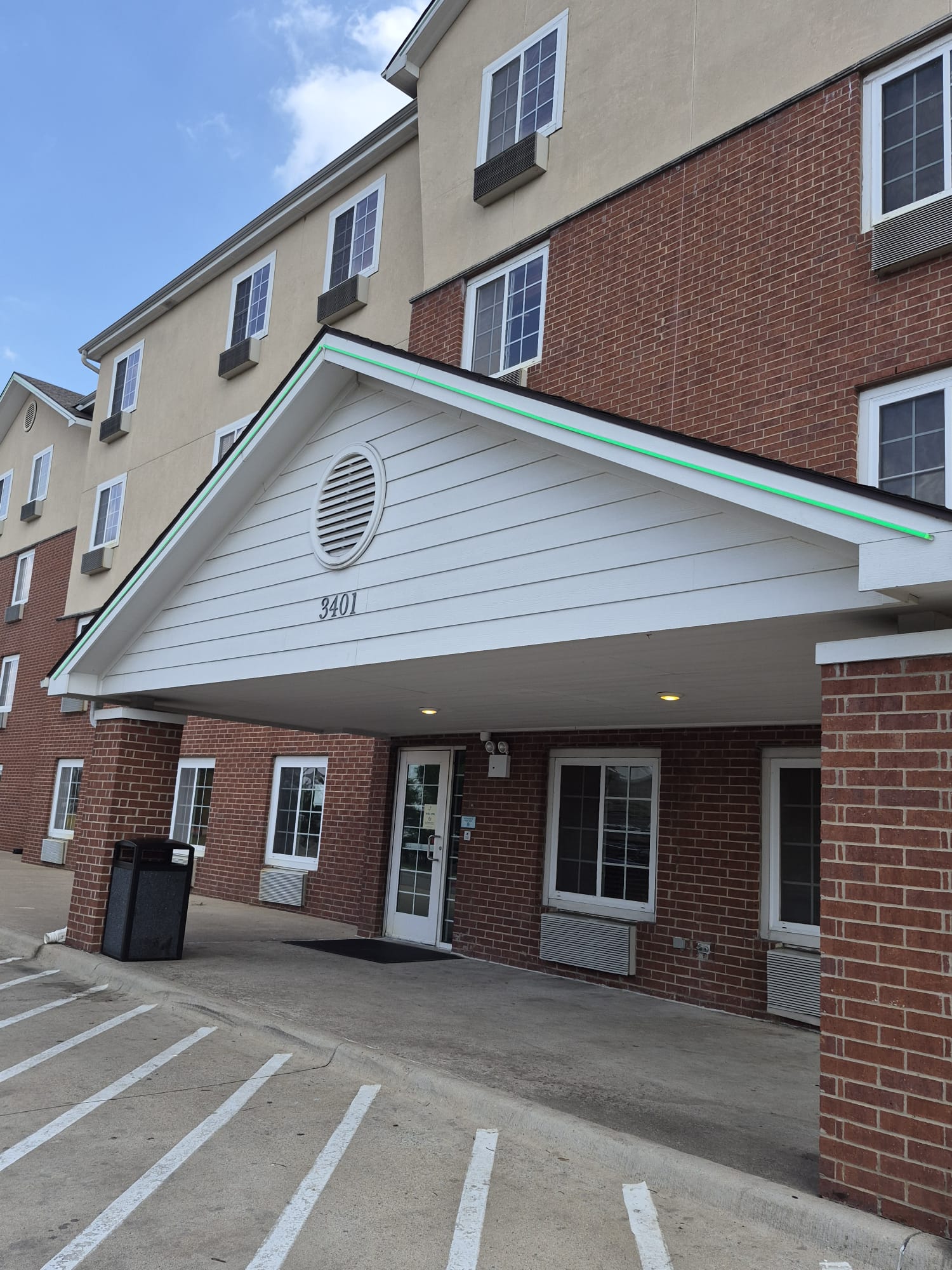
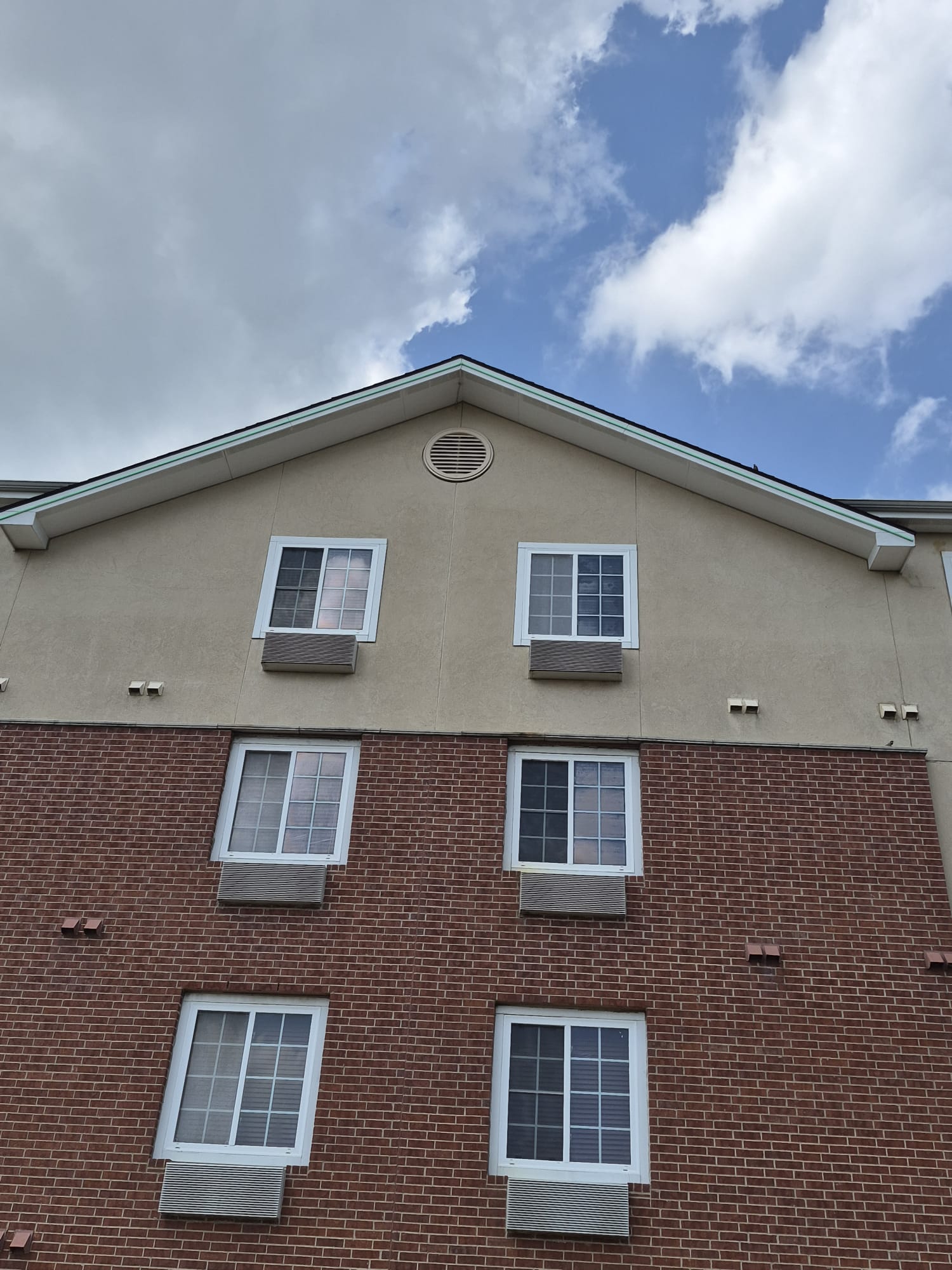
For the WoodSpring Suites hotel at 3401 N Central Expressway in McKinney, their signature neon-green roofline tubing and brightly illuminated exterior channel letter sign serve as their 24/7 visual identifier. However, severe Texas summer heat and violent thunderstorm cycles had triggered critical electrical failures: the prominent porte-cochère entry gable and multiple 4-story roofline peaks were exhibiting severe section outages. Half the gable was energized while adjacent runs were completely dark or visibly flickering.
A partially dark architectural sign is worse than an unlit building—it signals deferred maintenance, creates safety concerns for arriving guests, and risks citations under City of McKinney sign maintenance codes. Management issued an urgent dispatch request under commercial Work Order Ref #A59667-0000001.
2. Field Diagnostics: Pinpointing Voltage Drop & Circuit Fractures
Repairing commercial architectural LED systems requires deep diagnostic electrical expertise. Standard general maintenance contractors often assume an unlit neon tube merely needs a spliced replacement section. In reality, commercial flexible silicone neon consists of precision-engineered diode arrays wired in series-parallel circuits governed by Ohm’s law and strict Class 2 power limitations.
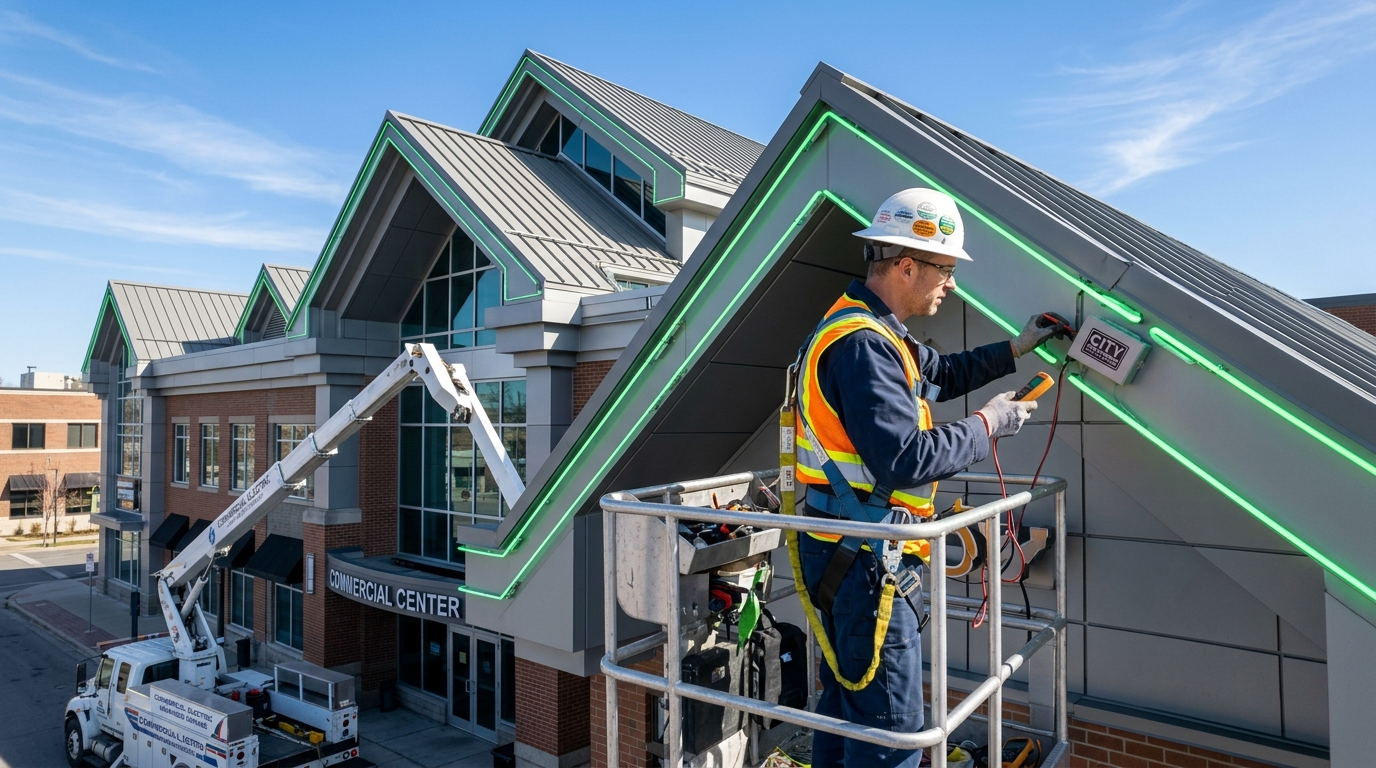
Operating under master electrician credential TDLR #18511, the Southwest Signs aerial service team deployed a 65-foot insulated bucket truck to conduct forensic electrical testing:
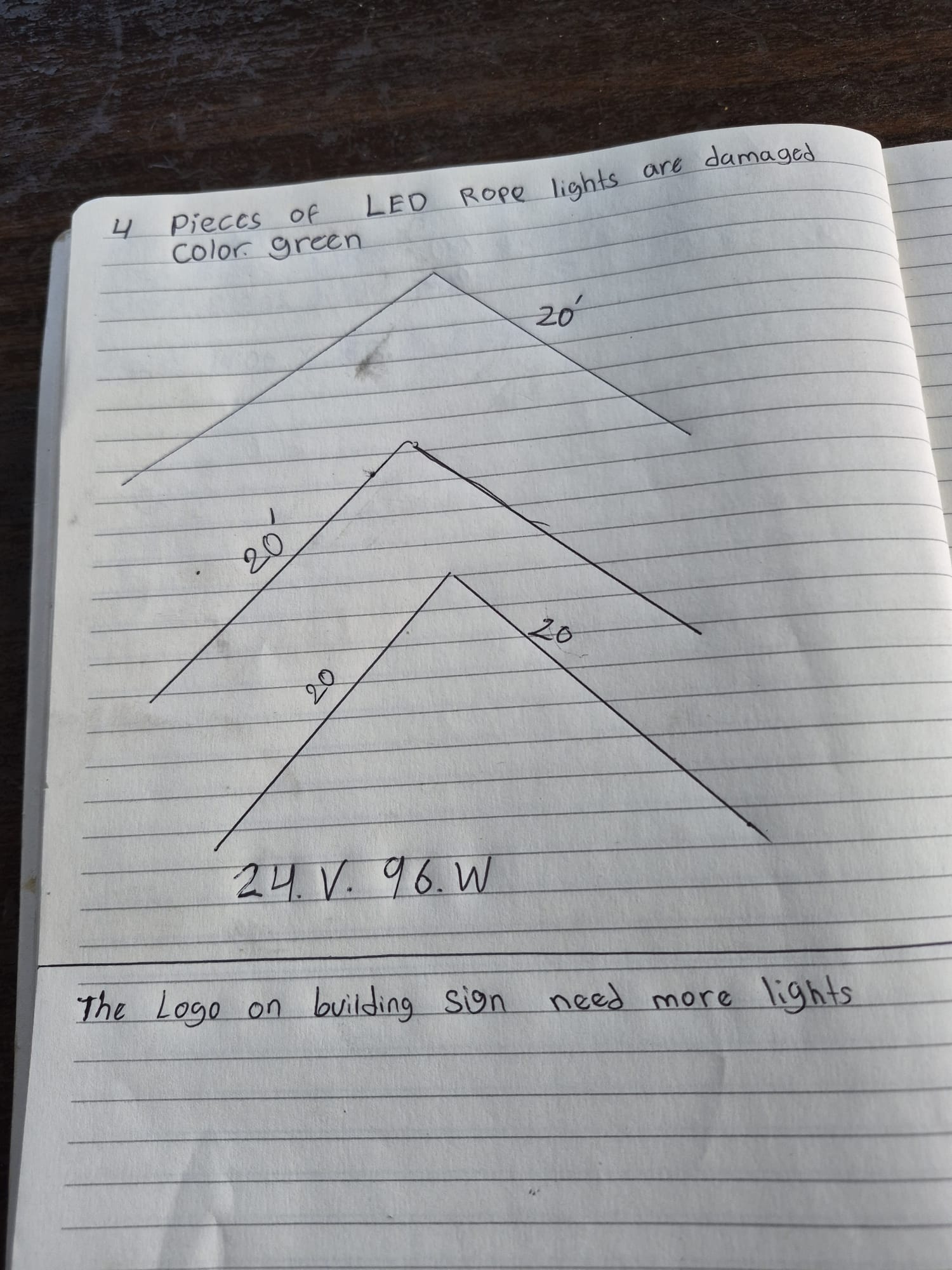
- Gable Pitch & Linear Run Quantification: Technicians mapped 4 separate 20-foot damaged runs of green silicone flex across the 4-story facade, calculating total wattage demand against existing power supplies.
- Daylight Shading & Diode Isolation: Under blinding Texas midday sunlight, diode failures can be invisible. Our technicians deployed black optical shadow shields over the aluminum extrusion tracks to pinpoint the exact internal cutoff diode.
- Profile Caliper Audit: Measured silicone casing dimensions with digital calipers to guarantee 100% mechanical snap-fit inside the building’s exterior aluminum mounting extrusions.
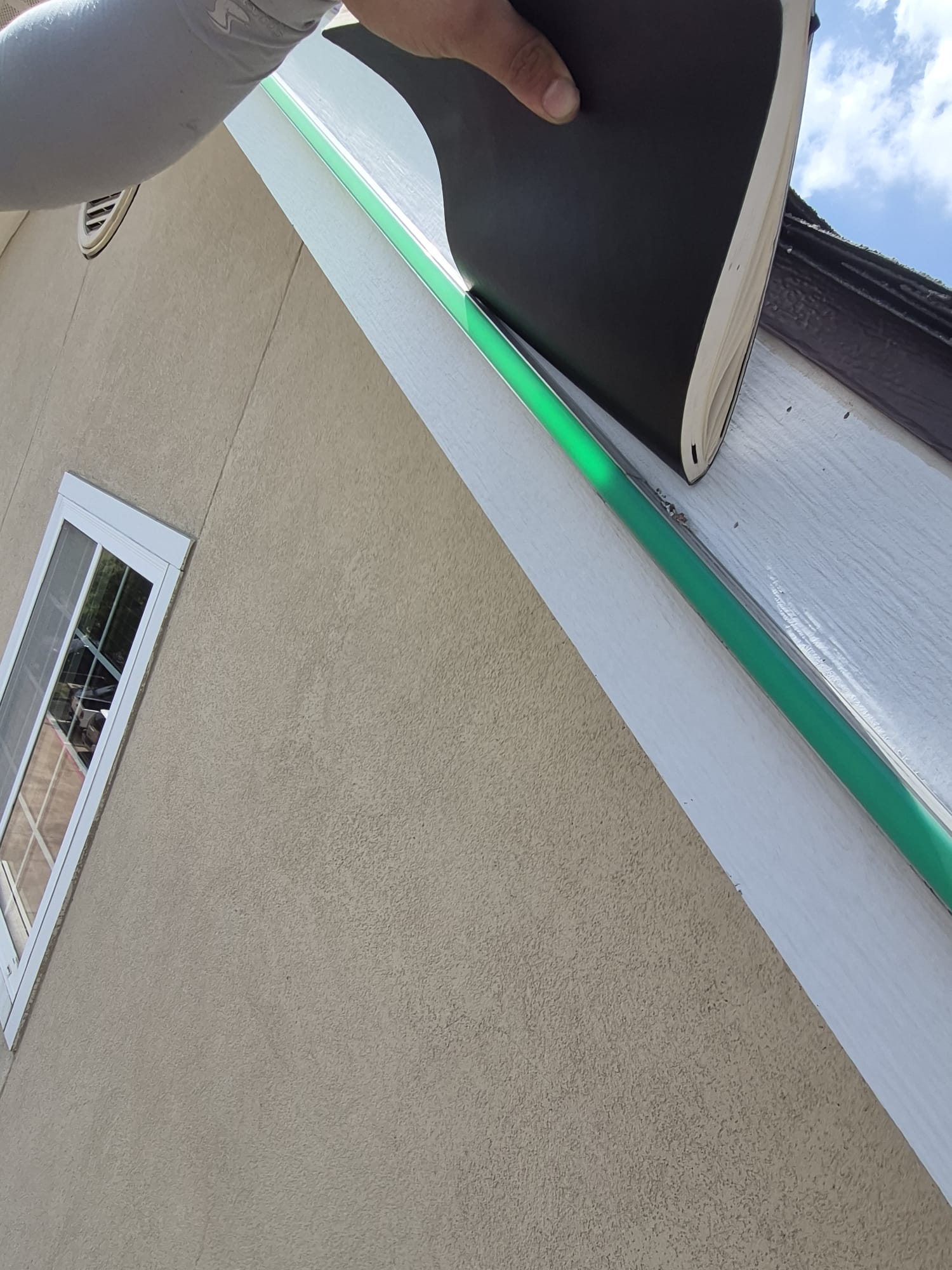
3. Electrical Load Engineering: 24V vs. 12V Constant Voltage Design
The primary root cause of the recurring failure at WoodSpring Suites was an outdated 12V DC electrical layout. On architectural rooflines exceeding 40 to 60 linear feet, 12-volt systems suffer severe voltage drop—the resistance in the copper conductors reduces the delivered voltage at the end of the run, generating excessive heat at the initial diodes and visible color-fading at the far ends.
Southwest Signs re-engineered the building’s electrical backbone to a heavy-duty 24V DC Class 2 constant-voltage architecture:
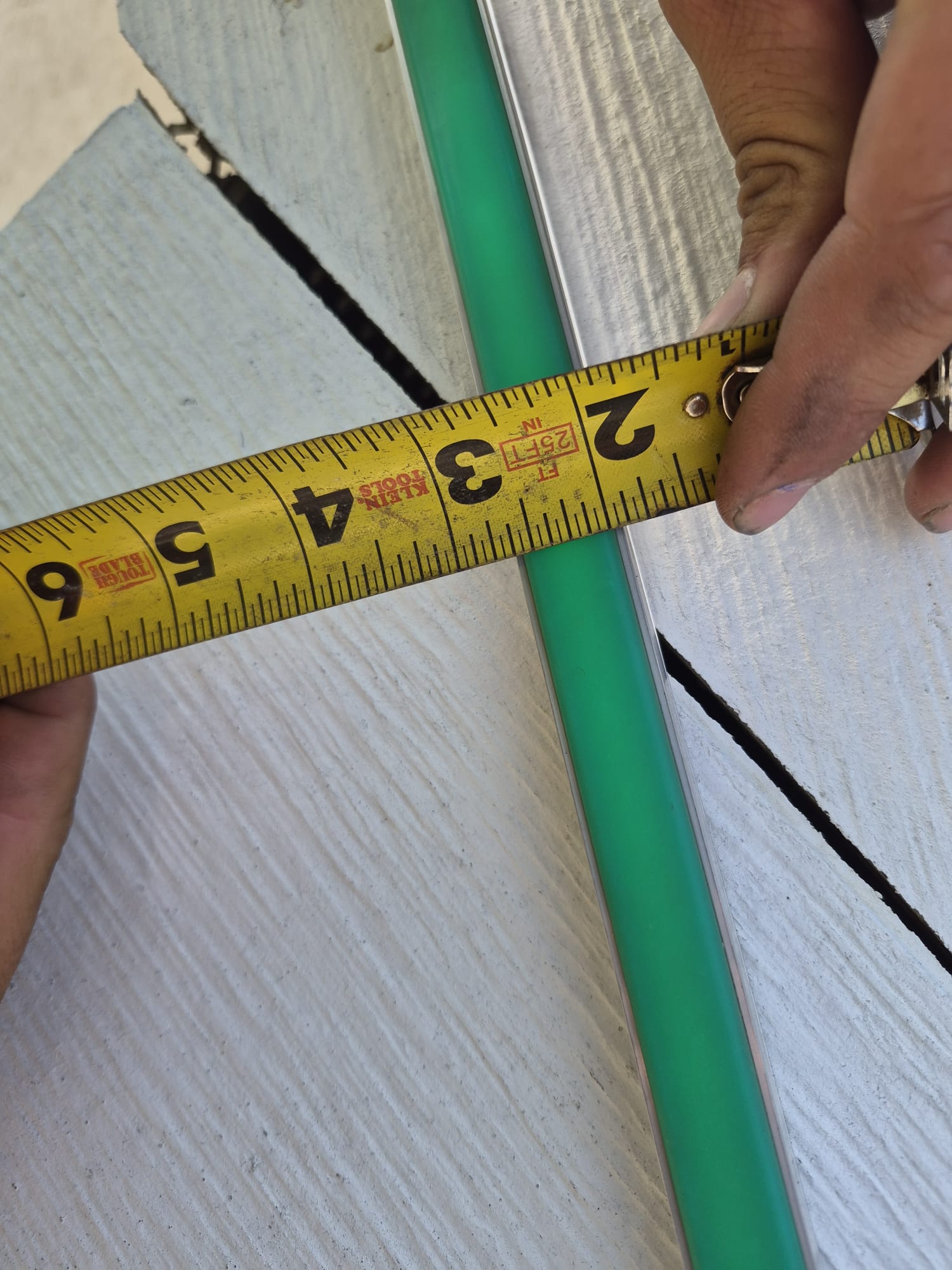
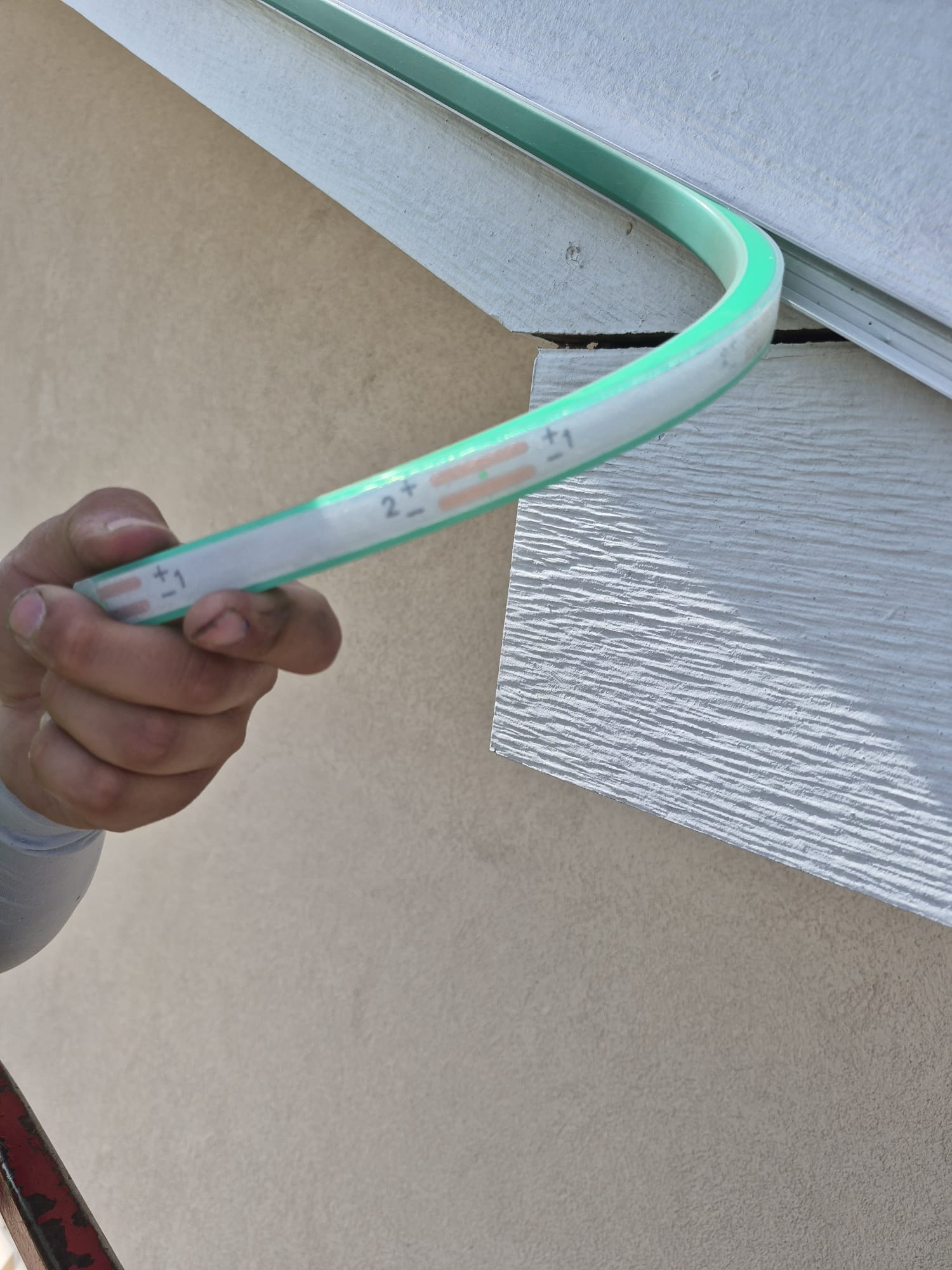
Technical Electrical Insight: 24V vs. 12V Run Distance
Doubling operating potential from 12V to 24V reduces operating current (amperage) by 50% for identical lumen wattage. This allows double the linear run distance per feed (up to 32 feet continuous on 24V vs. 16 feet on 12V), completely eliminating end-of-run brownout and dramatically extending driver lifespan. Review our Commercial LED Retrofits & Energy Savings engineering data for facility ROI benchmarks.
4. Channel Letter Cabinet & Secondary Transformer Audit
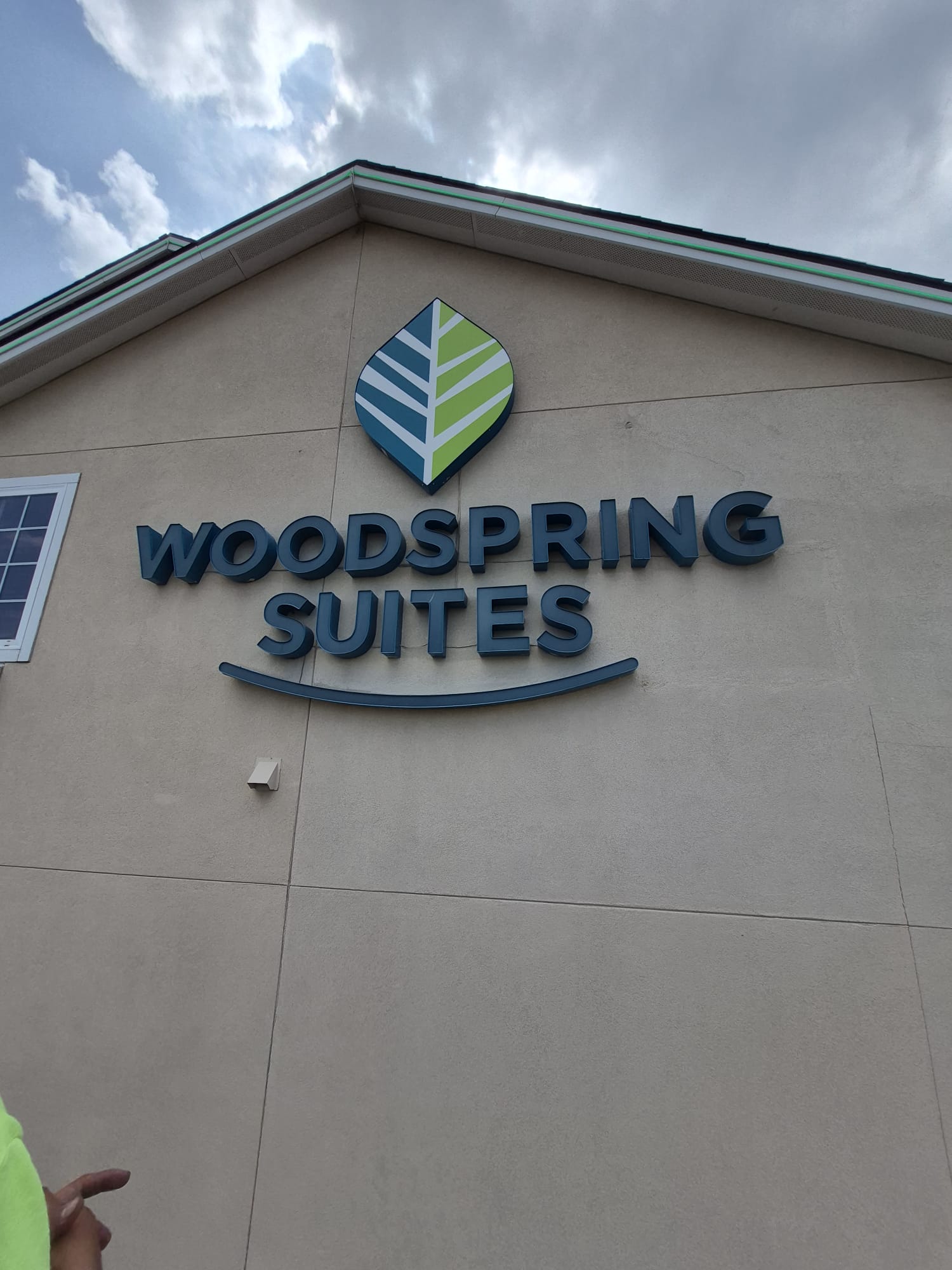
In addition to the roofline gables, the work order included auditing the high-elevation exterior logo sign. A brand’s channel letter sign can illuminate weakly due to secondary wiring resistance, diode lumen degradation, or failing secondary transformer output.
Our licensed electricians unfastened the primary logo sign faces to inspect the internal electrical enclosure:
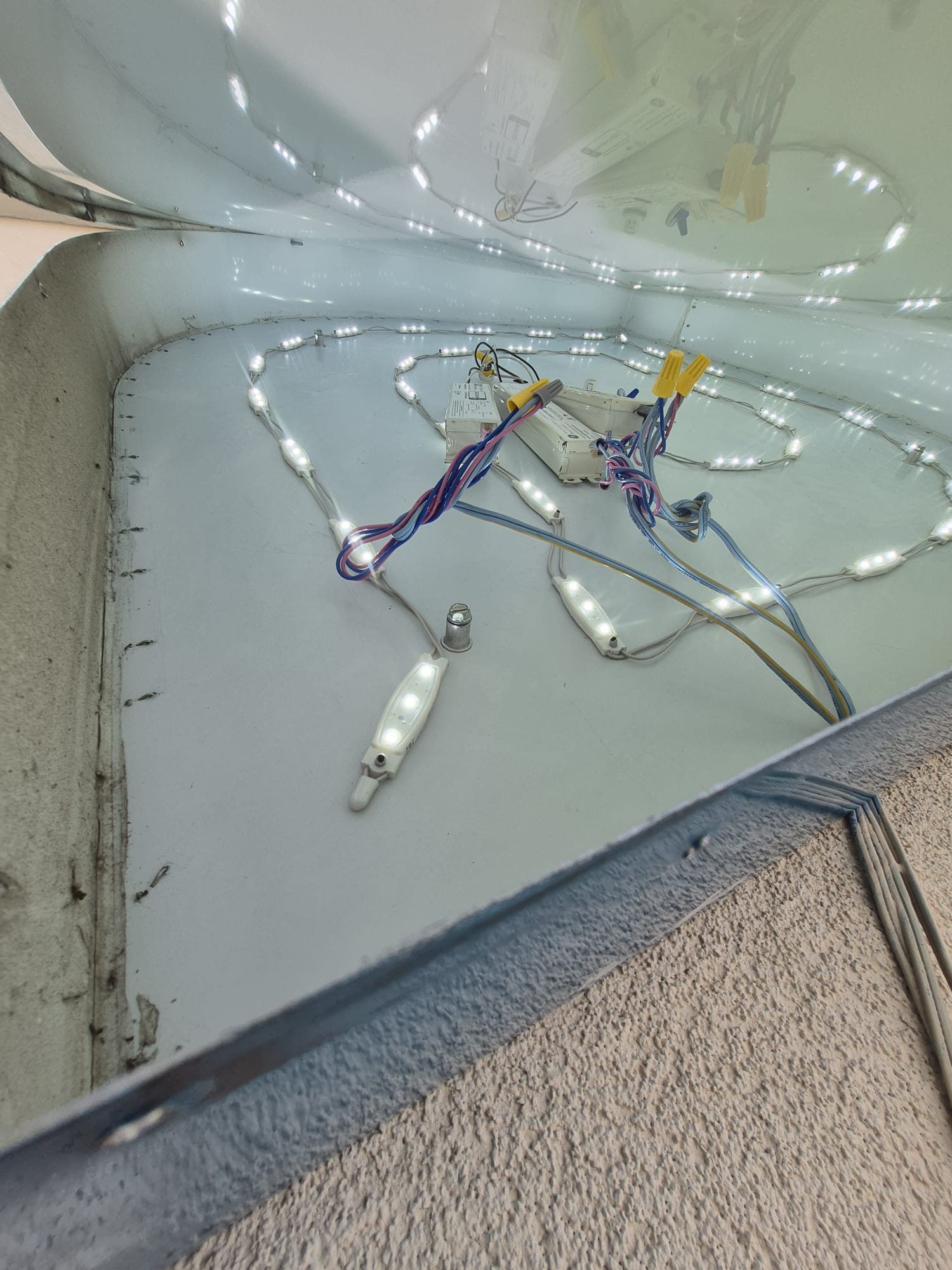
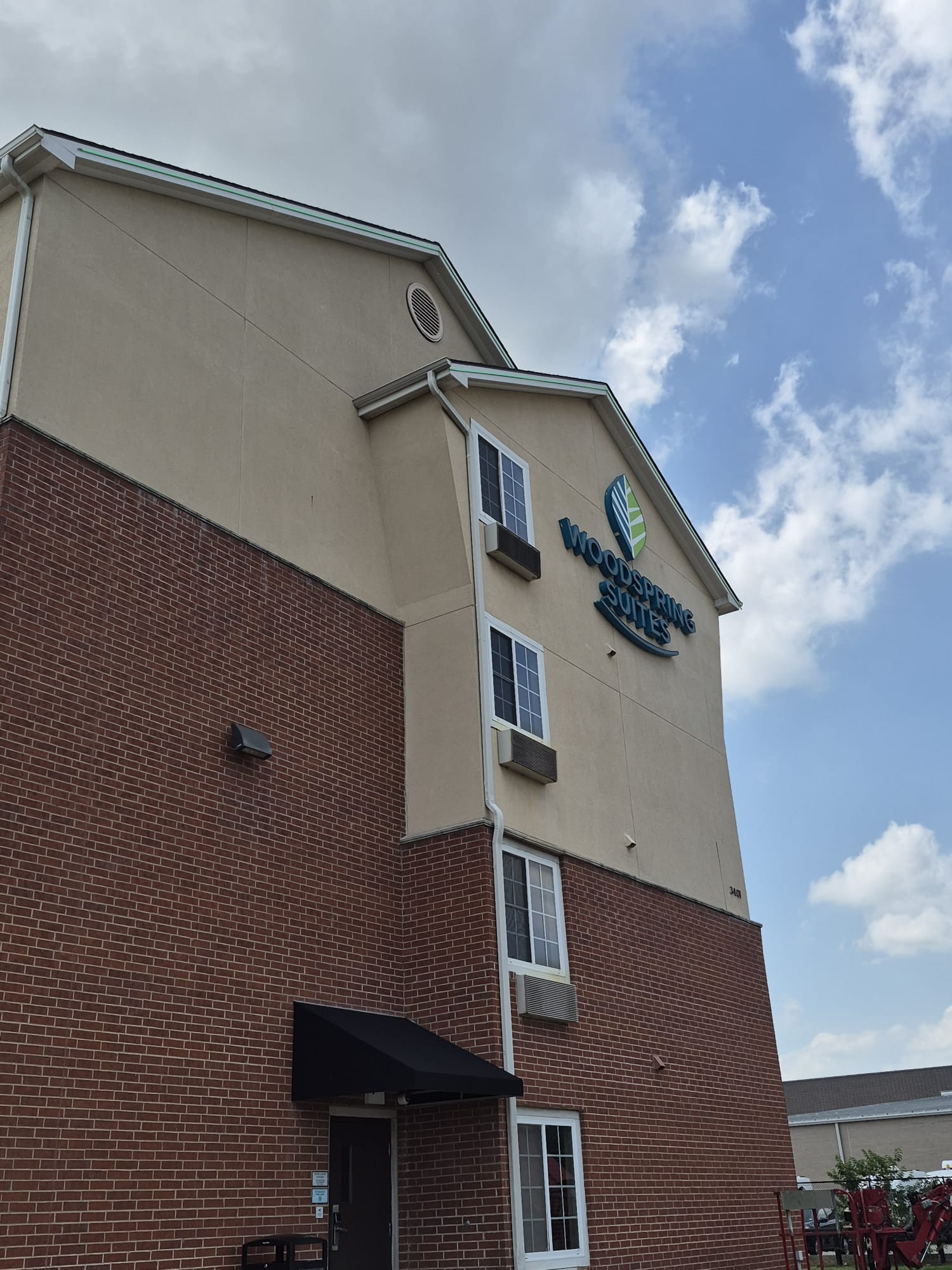
The audit revealed degraded wire splices and compromised secondary leads where moisture had entered through unsealed conduit nipples. Our electricians replaced deteriorated wire runs, secured UL 48 listed silicone-filled wire connectors, and re-balanced transformer circuits to guarantee consistent night illumination.
5. Turnkey Repair Benchmarks: Licensed TDLR vs. Uncertified Splicers
In North Texas, commercial exterior signs and high-voltage building feeds are regulated under the Texas Electrical Safety and Licensing Act. Hiring uncertified handyman services or generic sign brokers introduces severe liability risks:
6. The Permanent Solution: IP67 Sealing & Night Commissioning
Temporary splicing on building rooflines inevitably fails when exposed to freezing rain, intense heat expansion, and driving spring storms in Collin County. Southwest Signs implemented our permanent architectural lighting restoration protocol:
- Full 20-Foot Run Replacements: Stripped out all degraded, cracked PVC tubing and installed heavy-duty UV-stabilized exterior green silicone neon flex rated for 50,000+ operating hours.
- Industrial Silicone Barrier Capping: All building wire penetrations and mounting clips were sealed with neutral-cure structural silicone to prevent fascia wood rot and water intrusion.
- Class 2 Power Supply Balancing: Distributed loads across four independent 24V 96W power supplies to prevent thermal throttling and ensure balanced lumen output.
- Full Night Photometric Audit: Verified seamless illumination uniformity across the entire US-75 elevation, restoring the hotel’s prominent architectural presence. Learn about our complete Commercial Exterior Signage Solutions.
7. Commercial Sign & Lighting Repair FAQs in McKinney, TX
Why do commercial LED neon roofline lights fail in partial sections?
Commercial silicone neon flex consists of series-parallel diode groups. When intense Texas heat cycles cause solder joint fatigue or moisture penetrates an unsealed factory end-cap, an entire 3-to-5-foot circuit drops out while the rest of the run continues operating. Without balanced power supplies, adjacent diodes receive over-current and fail prematurely.
Are commercial sign contractors legally required to be licensed in McKinney, TX?
Yes. Under Texas law (Occupations Code Chapter 1305), any electrical sign installation, primary connection, or transformer repair must be performed by a licensed Texas Electrical Sign Contractor (TDLR). Southwest Signs & Graphics operates under Master Sign Electrician License TDLR #18511, ensuring complete city code compliance.
How quickly can Southwest Signs dispatch an aerial bucket truck in Collin County?
We offer emergency 24/7 dispatch across McKinney, Frisco, Plano, Allen, and Dallas-Fort Worth. For storm damage, primary sign outages, or electrical safety hazards, our fleet can mobilize within 2 to 4 hours. Scheduled service calls are typically completed within 24 to 48 hours.
Does upgrading from neon to LED reduce commercial utility costs?
Yes. High-efficiency 24V LED architectural flex consumes 65% to 80% less electricity than traditional high-voltage neon gas tubes and fluorescent ballasts. Furthermore, low-voltage Class 2 drivers generate minimal heat, eliminating high-voltage transformer burnout and qualifying commercial properties for local Texas utility energy efficiency rebates.
Dark Signs or Dim Rooflines Hurting Your Commercial Curb Appeal?
Get immediate, licensed field dispatch in McKinney, Frisco, Plano, and all of North Texas. Our master electricians diagnose and repair commercial signage with zero downtime.